Province’s TOD project looks to swap Moody Centre’s parking space for housing units
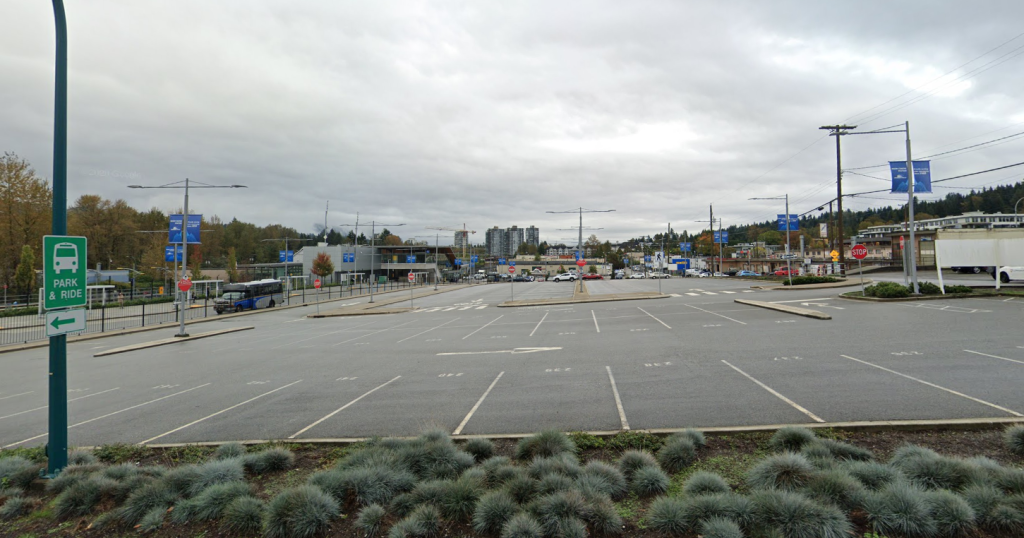
The province’s recently announced transit oriented development (TOD) project in Port Moody appears to be swapping Moody Centre Station’s parking stalls for housing units.
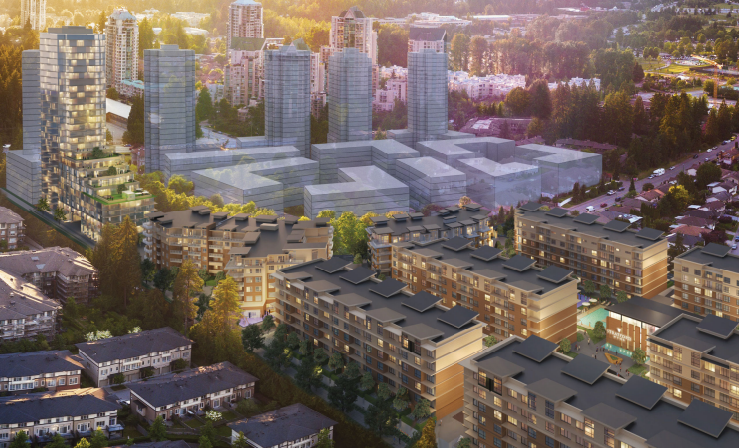
A total five parcels on Spring Street would be developed for the two-acre project the province has proposed, which accounts for the majority of the station’s parking (approximately 150 stalls).
News of the project was released on Monday, Nov. 27, with the province promising “hundreds of rental units, child care spaces, health-care services, educational opportunities and retail space.”
Local news that matters to you
No one covers the Tri-Cities like we do. But we need your help to keep our community journalism sustainable.
Minimal details were revealed in the press release, and the province has yet to submit a development application with the city.
“Building neighbourhoods next to transit makes sense,” said Minister of Transportation and Infrastructure Rob Fleming. “That’s why we are focused on creating more communities where people can go to work, school and access the services they need all close to transit. This is the first of many such projects across the province we will be supporting as part of our transit-oriented development initiative.”
An amendment to the Transportation Act in 2022 has allowed the Ministry of Transportation and Infrastructure (MOTI) to buy land around transit hubs to create more density around stations.
A total of $394 million has been earmarked for these purchases over the next three years, and MOTI has committed to building 10,000 new homes near transit stations over the next decade.
The province purchased one additional 20,000 sq. ft. parcel for the Moody Centre development, while the other four parcels were acquired nine years ago to facilitate the current “Park and Ride” stalls adjacent to the SkyTrain and West Coast Express stations, MOTI stated in an email to the Dispatch.
MOTI wrote that they could not reveal the purchase price as the property transfer and administrative aspects have not been completed.
BC Assessment valued the parcel at $9,280,000 as of July 1, 2022.
The province said they are working on further engagement with the community and local First Nation, as well as conducting site studies and design regarding Moody Centre.
MOTI added they were planning on submitting an application to the city within the coming weeks, early 2024 at the latest, while detailed design is expected to take a year.
When asked if any of the rental units in the development would be offered at below-market rates, MOTI replied that all housing on the province’s portion of the site would be purpose-built rentals.
They added, however, that larger homes would be affordable for working families and there would be options for lower-income families.
“Local government has targets for housing mix and affordability and the Province’s proposed development meets all these requirements,” MOTI stated.
Mayor Meghan Lahti said the city welcomes more development applications in the Moody Centre TOD area, and although no application has been submitted, the provincial plan seems consistent with council’s strategic plan.
“Development in proximity to the Moody Centre SkyTrain Station is in keeping with council’s goals of encouraging greater use of public transit, climate resilience, increasing access to jobs and services, and more affordable housing options,” Lahti stated. “We believe that this type of initiative would provide much-needed new housing and commercial development opportunities to serve the needs of existing and future residents.”
The announcement of the Moody Centre project follows closely on the heels of a provincial legislation mandating minimum densities in 500-metre radiuses around transit hubs.
The recent TOD legislation and public purchases of land are actions meant to complement each other, according to the province, noting they expect both to play a “significant role” in building the B.C.’s transit hubs.
Author