Port Moody liquor store trip-and-fall lawsuit falls flat, judge orders plaintiff to pay double costs
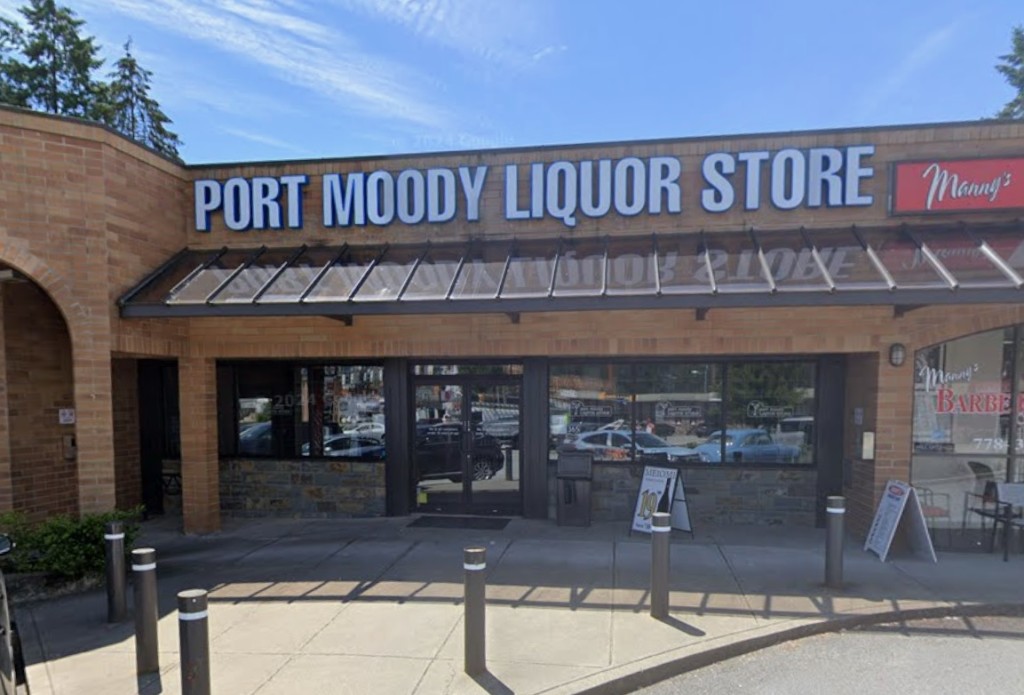
A woman’s lawsuit against a Port Moody liquor store has fallen flat, after a Supreme Court judge dismissed her claim and ordered her to pay double costs.
Justice Alan Ross’ decision on Oct. 3 stated there was no evidence the Port Moody Liquor Store, located on St. Johns Street, had done anything wrong when Janet Lynn Sawatzky tripped over a yellow metal plate covering an electrical cord in the store aisle.
“The plaintiff had no discernible evidence of the standard of care, or discernible evidence of how the defendant had breached the standard of care,” Ross said.
Local news that matters to you
No one covers the Tri-Cities like we do. But we need your help to keep our community journalism sustainable.
The trial began in July and lasted four days, but the plaintiff’s case was dismissed before the defence even presented evidence. Ross granted a “no evidence” motion, concluding Sawatzky had failed to establish any negligence by the store.
Sawatzky’s case stemmed from an injury involving a one-inch-high metal cord cover, painted yellow and fitted with non-slip tape. She alleged the cover was a tripping hazard that should have been removed, while the defendant argued it was a reasonable safety measure for managing floor cords in a retail environment.
Ross agreed with the defendant, noting there was no expert evidence establishing what the standard of care should have been, or how the store’s actions could be considered negligent.
While the claim was dismissed in July, the court’s final decision dealt with who should bear the costs of the case.
The court’s written reasons detailed a lengthy procedural history stretching back to 2022 – including mediation attempts, expert exchanges, and multiple settlement offers.
A formal offer as early as May 2022 to waive all costs if the Sawatzky agreed to dismiss the case, warning that the claim lacked legal foundation.
Despite the offer, the litigation continued through 2023 and 2024, culminating in trial. The judge found that by January 2024, when expert opinions were exchanged, the plaintiff “ought reasonably to have accepted” the defendant’s offer to settle.
Her own expert, he noted, had failed to identify any safety standard that was breached, while the defence expert concluded the cord cover was an appropriate and safe fixture.
“The expert opinions available to the plaintiff in January 2024 disclosed how difficult it would be to prove that the defendant was liable,” Ross said. “This was always a case in which the plaintiff had no discernible evidence of the standard of care.”
The defendant sought not only regular costs but also double costs – a financial penalty for refusing a reasonable settlement offer.
After the trial, Sawatzky filed for bankruptcy on Aug. 1, 2025, stating that roughly 60 percent of her debt related to costs from pursuing the case.
Sawatzky’s counsel argued that even though she had lost the case, the court should use its discretion to reduce or deny the defendant’s claim for costs because of her difficult financial circumstances and the burden of litigation expenses she had already incurred.
Ross, however, noted her financial hardship was largely the result of continuing a claim that should have been settled early.
“It would be ironic in the extreme, for a plaintiff to avoid being penalized for failing to accept an offer to settle, by relying on the impoverishment she has largely accumulated in prosecuting the very claim she ought to have settled,” he said.
Ross concluded the liquor store was entitled to its full legal costs and double costs from January 22, 2024, reinforcing the principle that litigants who reject reasonable settlement offers do so at their peril.
Author