Port Moody rejects tax hike on ‘land banking’ dog parks, keeps recreational rate intact
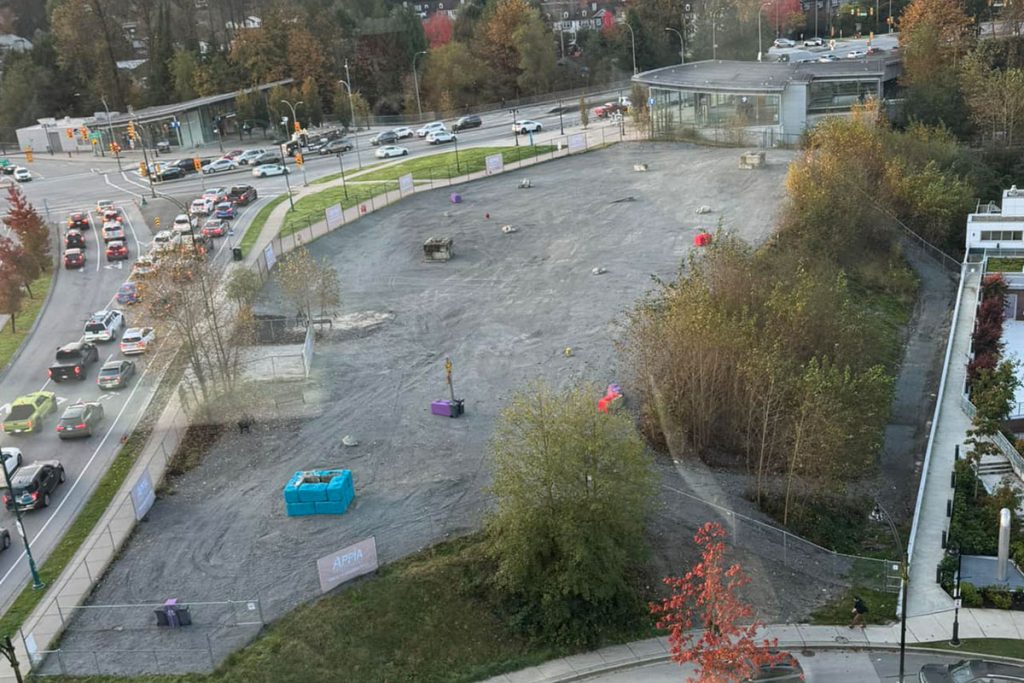
Land owners who have transformed their empty lots into dog parks while they wait to develop will be able to keep their tax breaks.
Port Moody council voted 6-1 on Feb. 17 to reject bumping up the tax rate on recreational properties, due to the meagre amount of funds that would be recouped and the harmful effects on legitimate recreational sites like Reed Point Marina.
Mayor Meghan Lahti said approving the change, which would align the residential and recreational tax rates, would be a “petty” move.
Local news that matters to you
No one covers the Tri-Cities like we do. But we need your help to keep our community journalism sustainable.
“We’re talking about a significant increase in their taxes, simply because we want to penalize people because they can’t develop,” she said. “I just feel like that would be a mistake.”
Two large lots in Port Moody – one directly adjacent to Inlet Centre SkyTrain Station and one just west of Moody Middle School – have been transformed into temporary dog parks.
Tyson Ganske, Port Moody’s manager of financial planning, said there had been a lot of media attention and community interest in a recent trend of developers reclassifying their vacant properties under lower tax brackets like recreational use while they await redevelopment.
The staff report said the city could discourage these types of conversions by upping the recreational taxes by 15 percent, making it equal to the residential rate.
However, council noted that change would only add 37.9 cents per $1,000 of assessed value.
Coun. Kyla Knowles called the amount “negligible.” She noted that for one of the developer dog parks, it would work out to just $13,000 more annually for the city.
“I don’t want to discourage landowners from making their properties useful while they wait for the market to improve,” she said. “Let’s face it, the market is terrible right now, so as long as we’re encouraging some public use of those lands, I’m happy.”
Coun. Callan Morrison had similar concerns, stating the city would lose almost an acre worth of dog parks in areas where the city cannot even afford to buy property due to the high cost of land.
“If we can encourage a landowner – for $1,000 a month of tax difference – to be able to provide that to the entire community, I think that’s something that we should be supporting, not scoffing at,” he said. “It would suck if that was shut down.”
Coun. Haven Lurbiecki initially said she would support adjusting the tax rate for recreational properties.
She argued the tax breaks would accumulate over time, and could encourage “land banking” by other developers, when the city should be trying to incentivize getting housing built.
“I don’t think that the precedent this is setting, and the message that it is sending, is the right one,” Lurbiecki said. “We know that landowners can get their rezoning, get their land boost, and find ways to sit on the land while they wait for conditions to be just perfect.”
Lurbiecki reversed her position, however, after hearing about unintended consequences for other recreational property owners in the city.
Ganske noted that only 12 properties are affected by the recreational rate, and while a small group would be affected, it includes sites such as the Ioco Boat Club and Reed Point Marina.
He noted the city is limited in how it applies tax rates in the city, describing it as a “broad brush.”
“When we’re talking about our tax policy, we have to apply it to the entire class. So all recreational properties would get treated equally,” Ganske said.
For Reed Point Marina, a property assessed at over $15 million, the adjusted rate would result in close to $6,000 in extra taxes annually.
Lahti said they need to consider the impact on all property owners under that tax class.
“This is not about dog parks or even about the owners of those properties. To me, this is about the other people that legitimately have that class,” she said.
Coun. Diana Dilworth agreed, describing it as a “lose-lose” situation.
She argued developers are only holding land because of governmental barriers and current market conditions.
“I think this would be a loss to pet owners who have access to new amenities that the city is not providing to them,” she said.
Paul Rockwood, general manager of finance and technology, said the land banking trend is more of an issue in the City of Vancouver, where business-classed properties – which pay a significantly higher rate – have been able to reclassify as recreational.
“In Port Moody, it’s not an issue because our (recreation) class and our (residential) class are fairly close,” he said. “It’s not much of a hammer because the difference is minimal.”
Author