Port Moody unveils pricey ‘legacy project’ to redevelop Kyle Centre
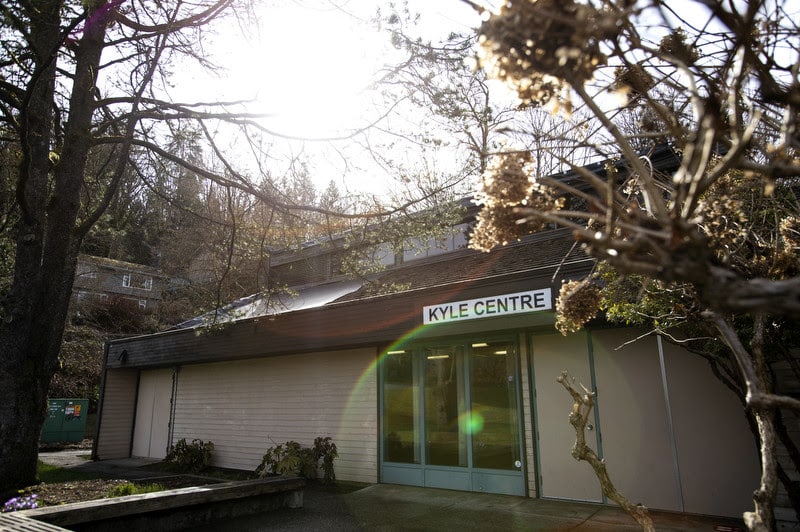
Port Moody council has unanimously approved moving forward with a major redevelopment of the deteriorating Kyle Centre on Tuesday, setting in motion plans to build a modern facility nearly triple the size.
At a July 15 meeting, council endorsed a $515,000 capital project to fund the conceptual design of a new 30,000-square-foot community centre, an adjacent civic plaza, and expanded park space on the current Kyle Centre site and surrounding city-owned lands.
Coun. Diana Dilworth called the plan a “legacy project” for the Moody Centre neighbourhood.
Local news that matters to you
No one covers the Tri-Cities like we do. But we need your help to keep our community journalism sustainable.
“I think this is the right plan, and it’s the right time,” Dilworth said. “There are costs to that, but this is great timing to start putting some of these costs into our budget.”
The future of Port Moody’s second largest recreational facility has been a hotly debated topic since the previous council’s $2.9 million plan to renovate the facility was cancelled in June 2023.
Staff said the facility, originally built in 1977, was quickly coming to the end of its usable life and required significant capital renewal to make it fully functional. The estimated costs of the new project range between $30 and $40 million.
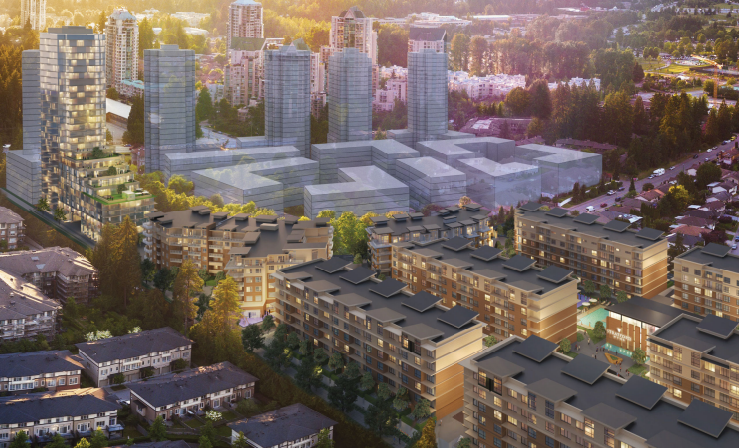
If timelines hold, construction of the new facility could begin as early as 2027 and be completed by late 2028. In addition to replacing the 48-year-old Kyle Centre, the project would enable new programming and potentially include future affordable housing on the western portion of the site, where a forested area would be excavated and developed.
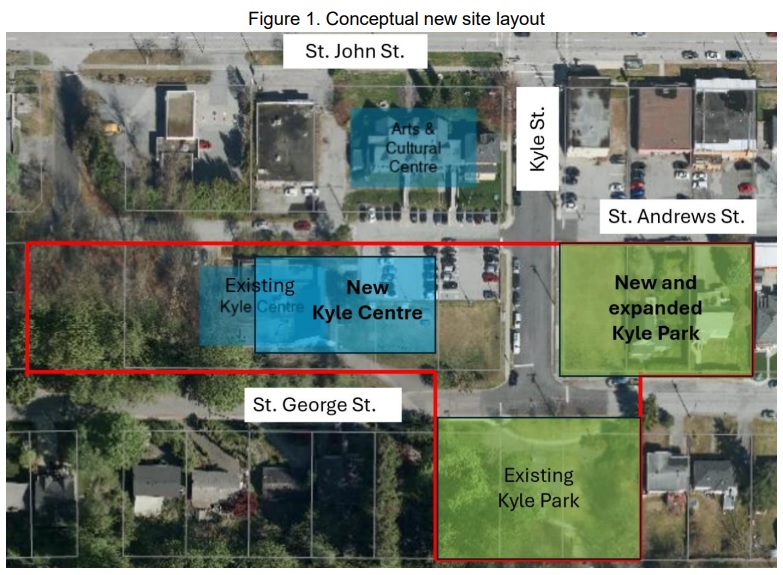
“This isn’t just putting up a replacement building,” Dilworth said. “This is tripling the amount of programmable space. This is acknowledging that we want affordable housing for seniors. And we’re making space there for it.”
According to the staff report, the new facility would include underground parking to replace the existing surface lot, which would be removed to make space for the centre and plaza. The parkade would be designed to serve both Kyle Centre and the Port Moody Arts Centre (PoMoArts), with possible future connection to a residential parkade if housing is built on-site
Coun. Kyla Knowles said the project answers long-standing calls from residents for more recreational and cultural amenities.
She expressed disappointment that the city was not able to partner with a developer to share costs and build housing on-site, due to being economically unfeasible in current market conditions.
While that might change in the future, she said it was important the city forged ahead.
“This building needs to be replaced, period. So let’s build it back bigger and better,” Knowles said.
Staff recommended a 50-50 funding split between city reserves and debt financing through the Municipal Finance Authority of B.C., which could result in a 1.47 percent to 1.97 percent property tax increase depending on the final cost. A final funding strategy, may also utilize grants and developer fees.
The city’s borrowing capacity has increased significantly due to a provincial change that doubles the “approval-free” borrowing, loans of up to $110 million without requiring a referendum.
Coun. Amy Lubik said she was “really excited” about the expansion, and emphasized the opportunity to incorporate more green space into Kyle Park and provide fully affordable housing on public land.
“I’m also really excited that we will have the opportunity to potentially follow through with looking at incorporating affordable housing into the expansion of civic facilities,” she said.
However, Lubik said she would prefer the city to work with BC Housing rather than a private developer to ensure “completely affordable housing” could be offered to more vulnerable residents.
Coun. Haven Lurbiecki raised questions about funding the project through future growth, stressing the need for “growth to pay for growth,” but cautioned against relying too heavily on new developments when the need for amenities is immediate.
She also said she would only support affordable housing on public land.
Tyler Ganske, Port Moody’s manager of financial planning, acknowledged the city’s current CAC reserve wouldn’t be sufficient to fund the entire project, but said in-stream development fees are expected to make up the difference.
“It’s ultimately going to come down to that final funding strategy that we bring back to council once we know what our total costs are and what options are available,” he said.
Coun. Samantha Agtarap argued that some form of partnership – whether with senior levels of government or a developer – would eventually be necessary to build housing on-site.
She said she hoped the federal and provincial governments will have grant opportunities in the future to help subsidize the project.
“Our population has tripled since Kyle Centre was built,” she said. “We know that we need more space.”
The approved motion directs staff to begin functional programming and public engagement in fall 2025. The first round of engagement will include current user groups, city committees, and the general public, focusing on identifying space needs and preferred programming. A second round will be held in early 2026 to gather feedback on the conceptual design.
Mayor Meghan Lahti said she supported the project “wholeheartedly,” noting the Moody Centre neighbourhood is taking on a significant amount of the city’s new growth.
“Moody Center deserves to have this new facility,” she said. “This is a really important project that will really transform that neighborhood for future generations.”
She also emphasized that key stakeholders be involved early in the design process.
“We need to know exactly what it is that they envision,” she said. “Because it’s going to be, in part, a shared facility, and we want to make sure we’re incorporating their needs into the process right away.”
Still, the new plan already has some critics.
Former councillor Steve Milani – who has frequently criticized the current council over the decision to cancel the previous repair project – said he was opposed to the plan during public input.
Milani said the costs associated with the project were “simply not responsible.” He argued that costs for recreation projects can “spiral out of control quickly,” citing Burnaby’s Confederation Park Community Centre as an example.
“If it can happen there, it can happen here,” he said, adding that he questioned staff’s cost estimates. “It’s not realistic. It’ll end up costing 50 percent more, maybe even double, and the residents will pay for it through long term debt and tax increases.
“The previous council had already approved a more affordable solution, renovating the existing Kyle Centre. That was the right move.”
Lahti dismissed the previous repair plans as insufficient and wasteful. “You’re not going to throw lipstick on a pig and just sort of slap things on to it and try to make it work.”
Author