Kwikwetlem, Patina beer pilot project sells out fast; eyeing future partnerships
Nation and local brewery come up with a limited-edition beer that was for sale in three Tri-Cities locations, offering residents a drink and important history lesson
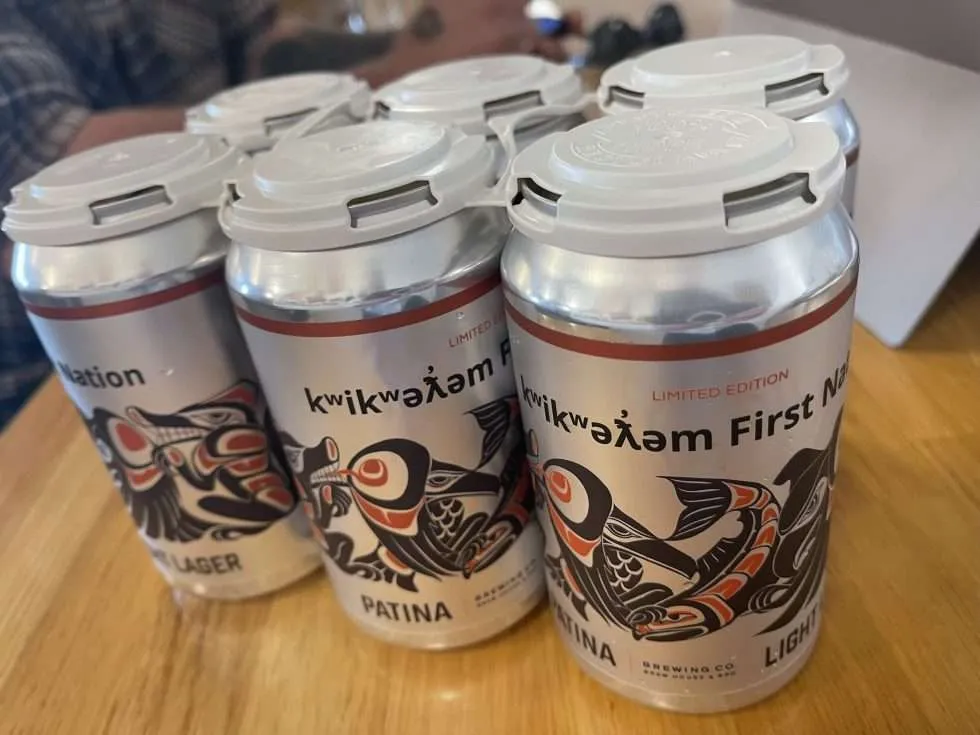
Dozens of beer cans in the Tri-Cities highlighted more than just nutritional facts earlier this month, placing a spotlight on the people who have called the region home since time immemorial.
Ahead of Truth and Reconciliation Day on Sep. 30, the Kwikwetlem First Nation and Patina Brewing collaborated on a beer can pilot project aiming to raise funds for the nation and supporting reconciliation.
The initiative featured Kwikwetlem artwork on 13 limited-edition flats of beer, with funds going to directly support programming for Elders, adults and toddlers within the nation, said Ron Giesbrecht, Chief of the Kwikwetlem First Nation.
Local news that matters to you
No one covers the Tri-Cities like we do. But we need your help to keep our community journalism sustainable.
The programs range from helping members attend conferences like the Elders Gathering, an annual assembly of Elders from across the province, to covering the costs for people to view some of the nation’s traditional artifacts held at the Royal BC Museum in Victoria.
“It brings the community closer together,” Giesbrecht said.
The cans were available for purchase at Patina Brewing and two BC Liquor stores, located in Westwood Centre and Como Lake, within the Tri-Cities. All of the flats sold out in days, Giesbrecht said.
“They got the shipment on a Wednesday and I think they were sold out by the weekend,” Giesbrecht said. “I thought that was pretty impressive.”
Despite the success of the pilot program, the Kwikwetlem First Nation weighed the decision to associate itself with a beer can.
“We struggled with it, to be honest with you, being First Nations and promoting beer,” Giesbrecht said.
There is a stereotype around Indigenous people and alcohol, Giesbrecht added. It was not a decision anyone in the community took lightly, considering the fallout from decisions around the involvement of alcohol in the lives of Indigenous people.
The Indian Act, a federal law introduced in 1876 with many restrictive and oppressive rules against Indigenous peoples, banned the sale of alcohol to Indigenous people.
It was an act that contributed to the negative perception of Indigenous groups, implying they weren’t responsible enough to manage alcohol and needed a third party to watch their consumption habits, according to a recent story in the Globe and Mail.
The law wasn’t the only factor that contributed to the negative connotation between Indigenous groups an alcohol.
Children who attended residential schools, government-sponsored schools that aimed to “kill the Indian in the child,” have a higher risk of experiencing alcoholism due to the neglect and abuse that took place at the institutions where they were forced to attend.
But as a few Indigenous-owned breweries across Canada challenge those stereotypes, the Kwikwetlem First Nation also viewed the partnership as a collaboration that could combat that history and highlight its presence to a new group of people within the Tri-Cities.
There was a QR code on each can that directed residents to the nation’s website, a page filled with resources on the nation’s history, traditional territory and culture.
“We’re in the Tri-Cities and we still hear from residents within the Tri-Cities that they don’t know where the nation is located,” Giesbrecht said. “They never knew there was a First Nation there. . . . We thought this might help with understanding.”
Greg Moore, owner of Patina Brewing, and former mayor of Port Coquitlam, told the Tri-City News last month that he hoped the partnership inspired other businesses to come up with ways to collaborate with Indigenous groups. The Dispatch reached out to Moore and Patina Brewing for comment in this piece but did not hear back before deadline.
The collaboration came together in a matter of weeks in September, Giesbrecht said.
At the time, a KFN board member was talking with Moore about incorporating some Kwikwetlem artwork on a wall outside the brewery. But the conversation quickly turned to an arts-themed idea that could get done ahead of Truth and Reconciliation Day: a limited-edition, speciality beer can.
“It showed us that he was very considerate of First Nations and the reconciliation side of things,” Giesbrecht said. “We gave it our thumbs up for a trial.”
The nation is still waiting to hear feedback from the brewery and two liquor stores on how the pilot project went. (Giesbrecht expects to be in touch with the parties within the next couple of weeks.)
Although Giesbrecht knows the cans sold out fast, he’s wants to hear feedback from the community and liquor store before running the speciality can project again.
“We’re waiting for that feedback and then we’ll decide what we’re going to do next — whether we’re going to continue doing it with different artwork, or if we’re going to not do it anymore,” he said.
In an article last month, Patina Brewing said it’s hopeful the collaboration will continue, noting the chance to incorporate some of the nation’s traditional berries — salmonberries, Saskatoon berries, blackberries — in future products.
But it’s too early to tell when those drinks will hit the shelves.
“We have had those conversations [about] the berries,” said Giesbrecht, adding that it will take many more chats with the local brewmaster to come up with a flavour that will sell. The first drink was a light lager, according to the brewery.
“More in-depth conversation on that will happen once we get the feedback to see if we’re going to continue moving down this path,” Giesbrecht said.
No matter what happens down the road, the support from the brewery and retailers has resonated with Giesbrecht.
After creating the limited-edition beer, he personally went to two government-run liquor stores to offer the product. Giesbrecht explained who he was, why the nation wanted to do this and how it could benefit the wider community.
“They said, ‘order us four flats,’ the other liquor store ordered three flats,” he said after his introduction.
“They didn’t hesitate.”
Author