Kwikwetlem First Nation releases thousands of salmon in decades long effort to revive sockeye
At the end of last month, Kwikwetlem First Nation released its first hatchery-raised salmon into the Coquitlam Watershed, marking a historic moment for the nation.
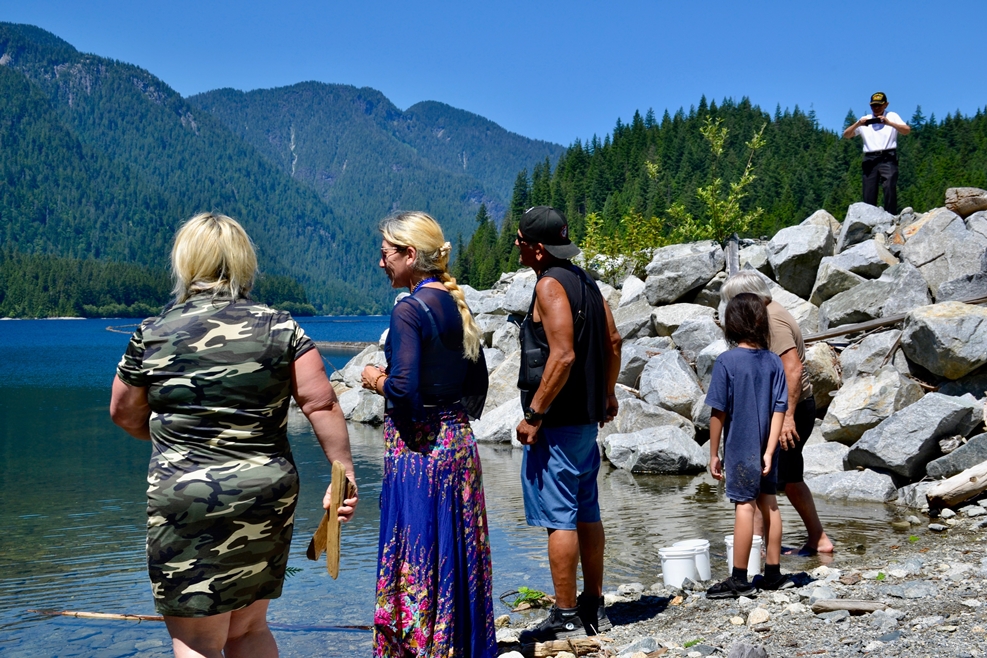
“Having the elders present to participate was a really wonderful moment,” Rodney Lee, Kwikwetlem’s coordinator of fisheries and the hatchery, told the Dispatch. “And then being able to have Kwikwetlem members there to be able to demonstrate their culture, being able to sing for the fish, being able to be involved with the release, being in that environment, it was wonderful.”
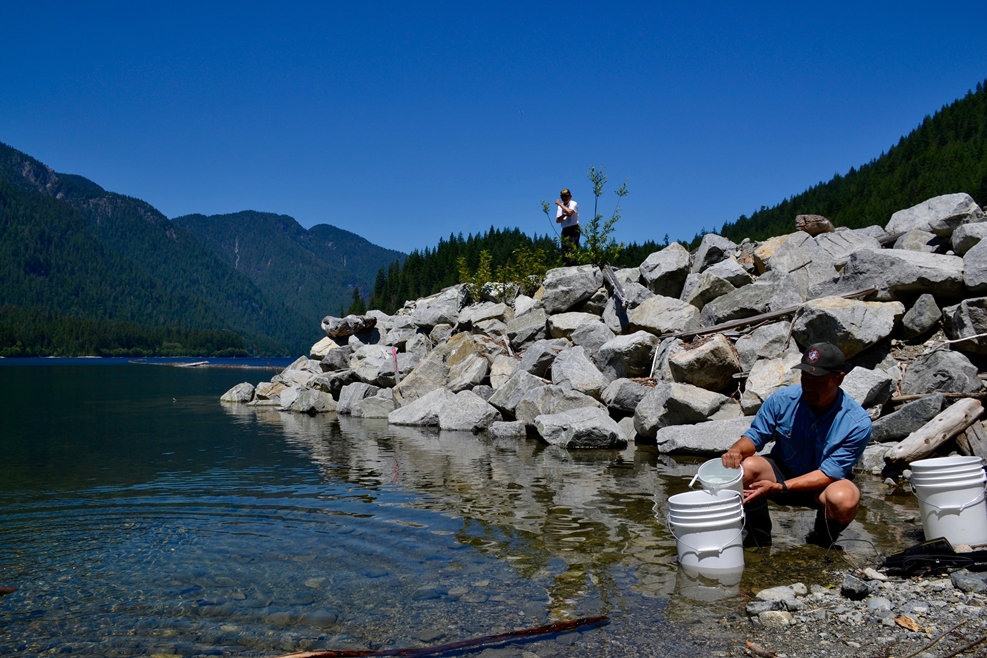
Nation members conducted a ceremonial release at Coquitlam Lake, in a spot that was easily accessible. Lee and staffer Percy Cunningham had hauled the salmon over in a transport trailer. At the lake, they put them in buckets and slowly acclimatized them to its temperature.
Local news that matters to you
No one covers the Tri-Cities like we do. But we need your help to keep our community journalism sustainable.
“And from there, you can just tip the bucket over and let them swim away on their own,” Lee said.
The salmon — about 9,000 coho — were raised in the nation’s recently completed hatchery over the winter. They got the eggs from nearby Grist Goeson Memorial Hatchery, incubated them until after they hatched and absorbed their yolk sacs, and then moved them to a tub.
“Where we could then have daily care and feeding for them all the way up until they were released,” said Lee.
This release is significant for a couple reasons, he explained. On a technical level, it means they can now start raising sockeye salmon, which is the ultimate goal of the hatchery. They decided to start with coho since they’re an easier fish to raise, and they can’t have the two species of fish in the hatchery simultaneously for biosecurity reasons.
The other has more cultural significance.
“I think being able to release coho for the nation, it’s a way for them to get re-established in terms of stewardship and really having that connection to these lands here,” said Lee.
Bringing back sockeye
The effort to restore sockeye has been long running, he said.
The fish need a lake to grow up in, and when the Coquitlam Dam was finished in 1913, it created a barrier to the fish from returning to the watershed, he explained.
“Sockeye haven’t been really present in this watershed since that time.”
“The construction of the Coquitlam Dam is one of the most significant colonial harms done to kʷikʷəƛ̓əm First Nation and our people as it took away the salmon from our rivers and food away from our cupboards,” Kwikwetlem Coun. George Chaffee explained in a 2022 press release.
Subsequent events — like gravel mining out the river creating sediment — further impacted the fish. It wasn’t until the ‘80s and ‘90s, when the nation and stewardship groups in the Tri-Cities (and eventually Fisheries and Oceans Canada) made a concerted effort to bring back the fish.
The Kwikwetlem salmon restoration program has been running for a couple of decades, Lee said. It includes members from the nation, BC Hydro, Metro Vancouver, community stewardship groups, DFO, and the province.
He said it was around 2007 when the first adult sockeye finally returned back to the Coquitlam dam. Genetic testing found that it was related to Kokanee in the lake, which are landlocked sockeye.
Between 2015 and 2019, they made the first attempt at raising hatchery salmon, but none returned out of the 5,000 released.
“That was kind of the start of wanting to create a hatchery where we can actually release sockeye produced year over year, to better understand some of the issues with this particular stock of Kwikwetlem sockeye, and trying to restore them to this watershed,” said Lee.
What’s next?
This summer, they plan to capture adult sockeye out of a trap at the bottom of Coquitlam Dam (where they check for and monitor the fish returning), and take them to the hatchery to hold them.
If all goes according to plan, the fish will spawn in late November and the nation will then go through the process of incubating the eggs. Once the salmon hatch, they will be held for about a year-and-a-half and released in 2027.
“It’s a story that’s kind of a long time running and still a long time to go,” said Lee. ”I would view this as kind of an inflection point in our efforts to restore sockeye.”