Port Moody surpassing provincial housing targets for now, but new applications fall by 70 percent: report
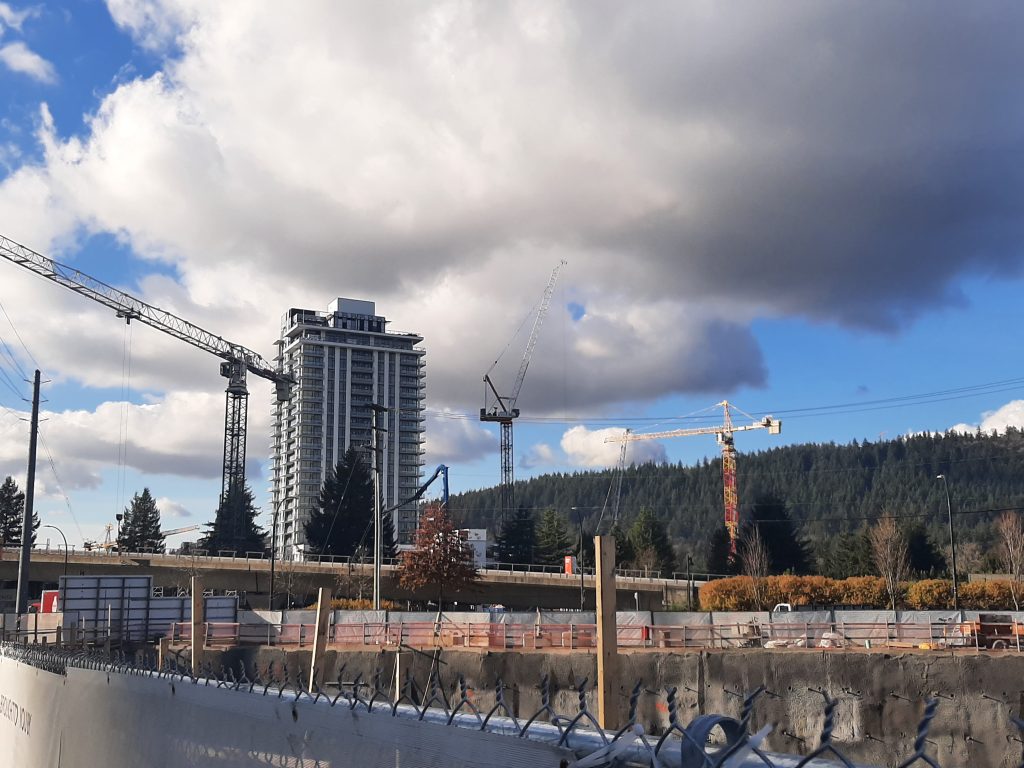
A sharp decline in new development applications could threaten Port Moody’s progress towards its five-year housing targets, despite the city being ahead of schedule.
On Nov. 12, a staff report to council on its progress toward the provincial housing targets showed there has been a 70 percent decline in the number of units in the rezoning stage – typically the earliest signal of future supply – from the 2023/2024 reporting period.
“The decrease in new applications made represents a significant concern to the long-term housing pipeline for Port Moody should this trend continue,” the report states, noting the city needs 9,796 new homes over the next 20 years to meet demand.
Local news that matters to you
No one covers the Tri-Cities like we do. But we need your help to keep our community journalism sustainable.
Staff attributed the decline to unfavourable market conditions including, high interest rates, rising construction costs, rising rental vacancies, and significant number of new units available in the region.
The report, covering the period from October 2024 to September 2025, shows the city added 477 net new homes, nearly doubling the 268-unit requirement set by the province for the second year under B.C.’s Housing Supply Act.
Combined with the first year’s totals, Port Moody has delivered 645 net new units since the targets took effect – comfortably exceeding the minimum two-year cumulative target of 499 units.

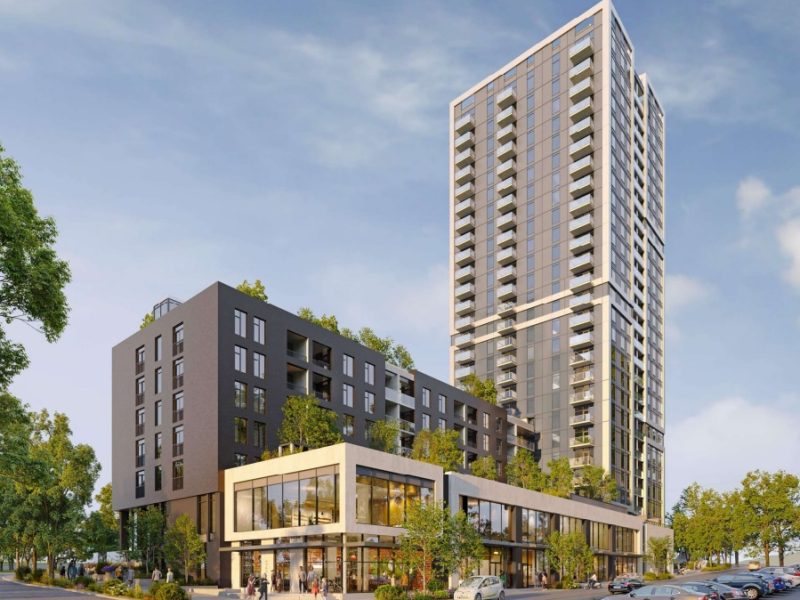
Four multi-family projects accounted for the vast majority of completions:
- Anchor (2002 St. George St.) – 162 units
- Sitka House (150 James Rd.) – 88 units
- Moody Yards Phase 1 (3015–3093 Murray St.) – 135 units
- Hue Phase 1 (121 Albert St.) – 100 units
Together, these developments delivered 485 new homes, with only 15 demolitions recorded across the city during the reporting period. Smaller additions came from single family homes and three newly created secondary rental suites.
The city’s growth this year included 210 one-bedroom and 213 two-bedroom units, along with 35 studios and 30 three-bedroom homes.
While Port Moody fell short of its first-year target due to an unusually high number of demolitions, the second year has put the city back on track.
Staff now say the outlook for year three is “excellent,” with 378 more units expected to be completed by fall 2026, many already under construction or nearing occupancy. If those units come online as forecasted, the city will come close to meeting the 1,003-unit target
8,547 units approved – but timing uncertain
In total, Port Moody now has 8,547 approved units, including rezonings, development permits and building permits – a 35 percent increase over last year.
However, most of these homes remain years away from occupancy, and nearly 7,400 do not yet have building permits. Some projects were rezoned as early as 2021 but have not advanced.
Staff estimate that between 614 and 752 additional units could be completed by the final reporting year in 2028, but caution that Port Moody may still miss its final target without another major project finishing unexpectedly early.
The progress report also outlines several policy and planning initiatives the city has undertaken to support housing delivery:
- Continuing work on the new official community plan
- Adopting zoning bylaw changes to accommodate small scale multi-unit housing (SSMUH)
- Issuing a SSMUH development guide
- Launching work on updated inclusionary zoning, density bonus, and rental protection policies
- Partnering with BC Housing, CMHC, and non-profits on major projects, including the Portwood’s below-market rentals and Metro Vancouver’s project on 125 Moray St.
While Port Moody is positioned to meet or exceed the third year’s targets, the downturn in new applications – mirroring a regional slowdown – has created uncertainty for the province’s fourth and fifth-year targets, when the city must reach 1,212 and 1,694 net new units, respectively.
Staff say the city’s success in these final years will depend on market recovery, timely progress on existing entitlements, and the potential emergence of at least one major multi-family project that could complete before September 2028.
Author