Keep smiling and don’t take yourself too seriously: Anmore founder Hal Weinberg dies at 90
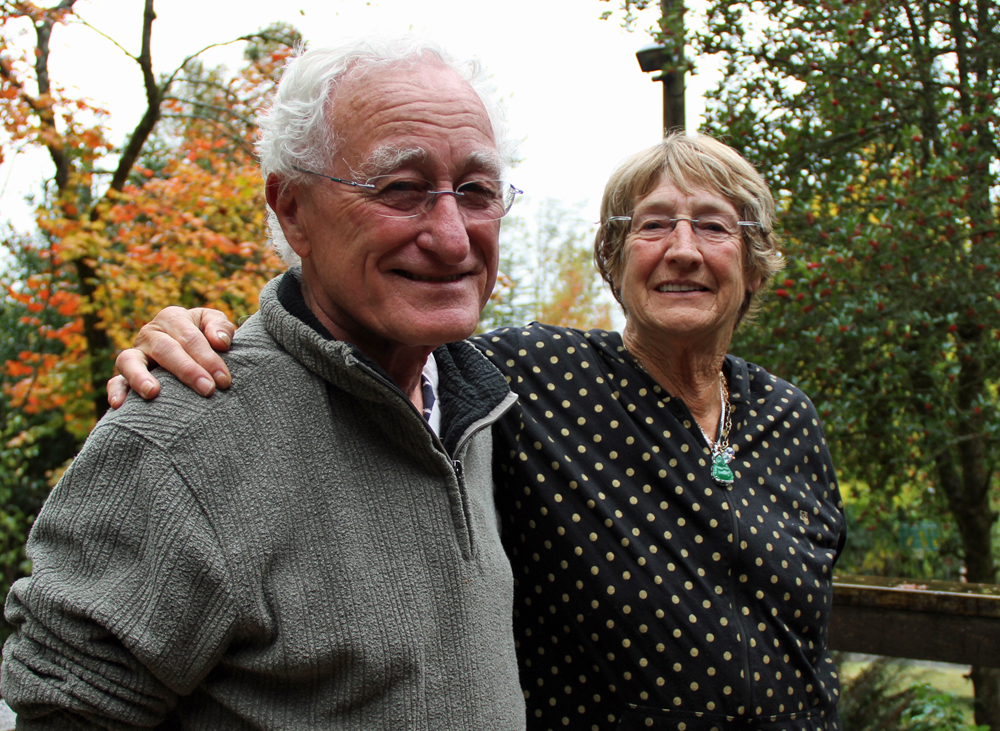
He didn’t want to see a slice of semi-rural paradise swallowed up by Port Moody. That was part of it, but, for Hal Weinberg, there was something more.
Reflecting on the beginnings of the Village of Anmore, Weinberg discussed what he considered Canada’s finest ideals.
“I always thought of Anmore as a model of how the diversity of opinion could be accepted with goodwill and friendliness. A model, in my own mind, of what Canada is all about,” he recalled in the series Anmore Stories.
Local news that matters to you
No one covers the Tri-Cities like we do. But we need your help to keep our community journalism sustainable.
Teacher, researcher, neuroscientist, mayor, military veteran, and village founder Weinberg died on Thursday. He was 90 years old.
“Hal passed away at home after a short illness, surrounded by family and love,” his family stated in a release.
Friends remembered the way Weinberg’s brilliance was belied by his humility. Despite spending more than half a century as a university professor, he was more interested in the thoughts of others than the sound of his own voice.
“He was rarely the first person to speak,” said friend Tracy Green. “He’d often start a conversation with a question.”
Growing up in Anmore, daughter Leah Weinberg remembered their door was always open and their table always seemed to be full.
“He just loved to sit around and talk about ideas with people,” she said. “Everybody was welcome.”
There was a wide range of both guests and topics.
“There would always be people at our kitchen table, just drinking beer and shooting the shit,” Leah said.
Weinberg didn’t talk much about his childhood in Brooklyn, New York. However, there are family stories about Weinberg heading down Ocean Parkway and, in the days before the automobile dominated the roads, he would rent a horse and ride along bridle paths between Prospect Park and Coney Island.
“He loved, loved, loved riding,” Leah said.

Weinberg was inducted in the U.S. army at 18 and served as an officer during the Korean War.
After becoming increasingly disenchanted with politics in the United States, first with the McCarthy era and later with the possibility of having to go to Vietnam, Weinberg flew to Canada in 1964.
Into Canada and out of Saskatchewan
His first teaching job north of the border was in Saskatchewan, which Weinberg’s wife Linda later remembered as a place where you could: “jump in a car, drive 100 miles, and get . . . nowhere.”
Hal and Linda soon headed west, with Weinberg taking a job at a then brand new school on top of a mountain: Simon Fraser University.
All the ceilings seemed to leak and the architecture left something to be desired, but for Weinberg, it became home.
He taught at the school from 1966 to 2012, establishing SFU’s Brain Behaviour Laboratory and researching the physiology of complex behaviour and brain imaging.
During a roundtable discussion of SFU’s early years, Weinberg seemed particularly pleased telling the story of his tunnel.

Located where the school’s Diamond Alumni Centre now stands, the pitch black, two-level tunnel was meant to aid in understanding how blind people acquire tactile information. It turned out, Weinberg noted, to have an appeal beyond research.
“It got so well known that tour buses used to stop,” he said with a chuckle.
Some tunnel-goers would take off their clothes, crawl in, and refuse to leave.
“All sorts of things were going on,” he intoned, noting they eventually needed to install speakers urging squatters to vacate.
As a researcher, Weinberg’s work included studying connections between brain function and Down syndrome, the cumulative effects of concussion, as well as the impact of fatigue on airline pilots.
In 2001, Weinberg wrote a report on the dangers of failing to account for the circadian rhythms of pilots. He made six recommendations and, according to a CBC report, an official with Transport Canada asked Weinberg to remove four of those six recommendations.
Nine years later, a CBC News investigation concluded that fatigue might have been a factor in 12 crashes.
In 2010, pilot Barry Wiszniowski, a member of Air Canada Pilots Association, called for Weinberg’s recommendations to be implemented.
“If they had been implemented in the time of the report, we could be already years ahead,” he said.
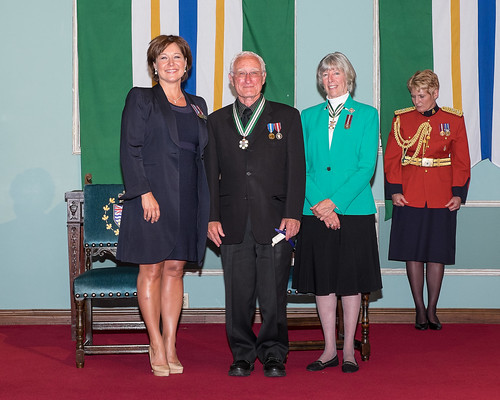
Weinberg was 80 when he was awarded the Order of B.C. for his work in local government as well as his research into brain function.
The land that urbanization forgot
While SFU moved out of UBC’s shadow, Weinberg moved from Ioco to Anmore. It was the early 1970s and the village had a population of about 250. It was where he and Linda raised their daughters Sarah and Leah.
The city seemed to disappear on the drive up Sunnyside Road, Linda recalled.
“It just fell away behind you and you were in the country,” she said.
“You would jump on the horse and ride to the lake and all the neighbourhood dogs that were in the general vicinity would come with you,” Leah remembered.
At one point, the Weinbergs had eight horses, Leah recalled.
“He would adopt any horse that didn’t have a home,” she said.
When Leah was too small to heft a saddle, she used to ride a nag bareback while her father rode a skittish former racehorse named Rosie.
The two horses were trotting home from the lake one day when a pickup truck crammed with teenagers passed them on the dirt road.
Until then, Weinberg had been straining to control his high-strung horse. Fifty years later, Leah could still describe the veins bulging in her father’s neck as he struggled to keep Rosie from bolting.
“My dad . . . never lost his cool,” Leah said. However, one of the teenagers threw a beer bottle at Weinberg and his daughter.
“He just let the horse go.”
He was a calm and kind, loving and reasonable. But for a brief flash on a dirt road, Weinberg might’ve been Reuben J. Cogburn galloping with reins between his teeth.
“I heard one of the kids go, ‘He’s coming!’” Leah laughed, remembering the way she exhorted her nag to keep up so she could see what was happening.
Her father probably just yelled at the teenagers, she said.
Still, when she thinks back on it, she sees: “A magical moment of him barreling down the road.”
A name without a village, an Emperor without a council
Fire swept through Anmore near the end of 19th century. The trees the fire left were logged by settlers, leading to the unofficial name of Stump Ranches.
The name “Anmore” dates back to 1917, when a homesteader working to secure water rights rechristened a creek that ran through his property. In order to stake his claim and keep a sand and gravel company from redirecting the waterway, Franklin John Lancaster combined the names of his wife and daughter – Annie and Leonore – added an ‘m,’ and Anmore was born.
The name was in common use by 1947 but, until 1987, Anmore was officially part of Electoral Area B.
Weinberg eventually became the director of the area, a position that granted him mayor-like powers without the usual checks and balances, Linda recalled.
“We used to call him The Emperor because he didn’t have a council so he didn’t have to argue with anybody about decisions, except the community, of course.”
Weinberg took the job to keep Anmore rural, a concept that found support from neighbours, Greenpeace founders Robert and Bobbi Hunter.
The two couples shared a utopian vision for the land, Leah said. It was a vision that was soon tested.

In the late 1970s, the Greater Vancouver Regional District (now Metro Vancouver) proposed increasing the village’s population to 15,000 by 1988.
To counter that plan, Weinberg would need a concept.
In 1987, they planned their strategy in the Hunters’ basement, Weinberg recalled.
“After many bottles of wine and beer we finally came up with the Anmore Concept.”
Concept in action
The concept was about small-scale government, maintaining the area’s wilderness, and ensuring the area didn’t get “swallowed up by Port Moody,” Weinberg recalled.
Anmore would allow for a “ruggedly individual way of life” with limited services, and houses on acreage.
More than 88 percent of the area’s 333 voters supported incorporation. On Dec. 7, 1987, Anmore was officially a village.
However, as part of a three-way deal with the province and Port Moody, Anmore lost the tax revenue of Imperial Oil, which accounted for 85 percent of all Anmore taxes in the 1980s.
Good ideas and strong principles
It was that Anmore Concept that brought Tracy Green to the village, she said, recalling it sounded like: ” exactly the kind of place that I would love to live.”
“One of the reasons I moved to the Village of Anmore was because I’d read about Hal and the Anmore Concept,” she said.
Incorporating seemed less about control and more about a certain type of freedom, Green said.
“He just wanted people to be able to enjoy their life in a beautiful setting.”
Green served on several committees while Weinberg was mayor.
In all things he did, he was “incredibly humble,” Green said.
“He always used to say . . . good ideas could come from anyone,” she said. “He would always listen to people’s ideas . . . it didn’t matter who it came from.”
He maintained his principles in his final years. In 2017, he announced that he quit the B.C. Liberal party (now B.C. United) after a Liberal MLA supported partial privatization of the health care system.
“I was just completely disappointed,” he told The Tri-City News at the time, “I’m a strong supporter of a Canadian health system.”
The flag at the Anmore Community Hub was lowered to honour Weinberg.
“He loved Anmore and everything it represented, always hoping for it to be a small, unique and diverse community,” stated a message from the village.
Legacy
Weinberg’s legacy is rare, noted friend and real estate consultant Michael Geller.
“There are very few places in Metro Vancouver where one man really got to shape the vision of the community.”
Geller and Weinberg both spent time at SFU, “albeit in very, very different capacity,” Geller noted.
“He was a brilliant, brilliant man, and I was the university’s real estate developer.”
They worked together in 2007 when Geller was retained by Imperial Oil to advise on the disposition of land now known as Anmore South.
Geller recalled Weinberg’s vision of a distinct, semi-rural community, “on the fringe of Metro Vancouver.”
It was a vision to which Geller ultimately subscribed.
When Imperial Oil put those lands up for sale, there were 150 acres in Anmore. “I advised potential purchasers: you might put 135 homes on them,” he said.
Current plans for that land envision much more density, Geller noted.
It was because Weinberg cared so much for his community that the community cared so much for him, Geller said.
“There will be people who tell you they disagreed with him, but they still very much admired him,” Geller said. “He lived a wonderful life.”
He held a strong belief in the value of ideas, Leah said.
“He tried to never let personal issues get in front of the ideas.”
The strength of those ideas came from diversity.
“It was kind of his core belief. The more ideas and the more diverse those ideas and people, the better off things were,” Leah said. “Diversity in everything. . . . In people, in ideas, in biology.”
In one of Weinberg’s final research projects, he examined the connections of brain function on individuality, and the idea that diversity of brain function could impact herd mentality and lead to a more harmonious society.
Asked how Anmore should remember Weinberg, Green hesitated.
“That’s a big question,” she said, her voice cracking with emotion.
You could name a building or a street in his honour, Green noted, but the best way to honour Weinberg might be to treat people the way he did, she explained.
“As I say this through tears . . . probably some of my most cherished advice Hal would deliver at the most appropriate times . . . was really simple. He would just say: ‘Keep smiling.’”
Weinberg would encourage friends not to take themselves too seriously.
“People don’t need to be arguing and combative and adversarial . . . people can really deal with ideas and how to make things better, and I think that’s his legacy,” Green explained.
However, she admitted to making one small change in Weinberg’s honour.
“I’ve already started calling the community hub Hal Hall,” Green said.
Author