Good Samaritan Overdose Act upheld in Canada’s highest court
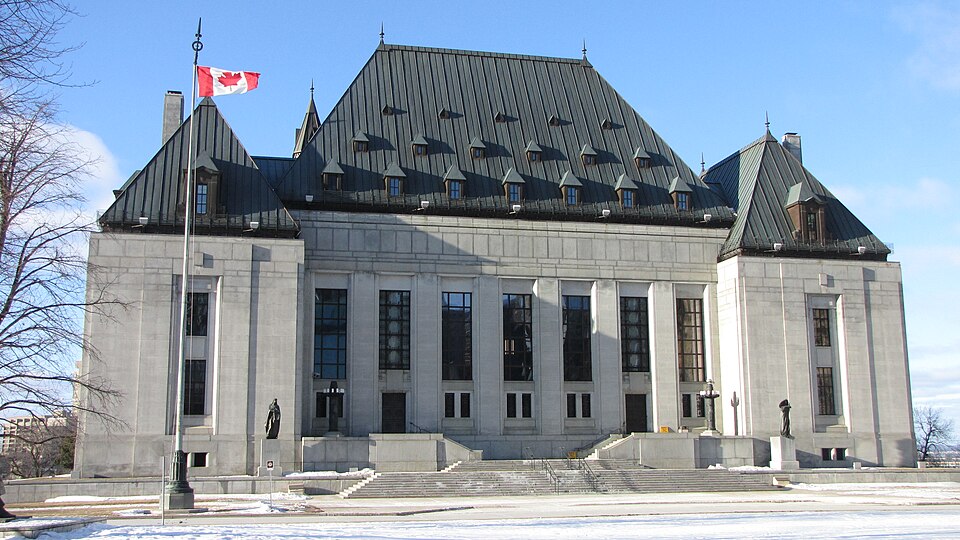
A law put forward by a local MP was recently tested in the highest court of the land.
The legality of the arrest and subsequent conviction of Paul Eric Wilson hinged on the Supreme Court of Canada’s interpretation of the Good Samaritan Drug Overdose Act.
Introduced and sponsored by Coquitlam-Port Coquitlam MP Ron McKinnon, the act attempts to take away the threat of arrest for witnesses who either stay on the scene or call 911 after seeing an overdose.
Local news that matters to you
No one covers the Tri-Cities like we do. But we need your help to keep our community journalism sustainable.
Wilson was one of four people who stayed at the scene of an overdose in Vanscoy, Sask in September 2020.
There were four people riding in a truck near an elementary school when a woman overdosed after using fentanyl.
The constable who arrived on the scene saw Wilson and another man lying under the truck, seemingly trying to fix something. The officer also spotted a small bag on the ground containing what looked like crystal meth.
After smelling marijuana and noting signs of impairment, the officer saw Wilson “handling something in his pocket and saw some white powder on the ground” near his feet.
Following some questioning, the officer arrested Wilson.
A subsequent search revealed drugs, drug paraphernalia and a modified handguns, parts for firearms, and ammunition stuffed in Wilson’s backpack.
A trial judge convicted Wilson of firearms offences and possession of documents intended for identity fraud.
However, the Court of Appeal quashed those convictions, concluding Wilson shouldn’t have been arrested because the only reason the police initially picked him up was for drug possession.
While three justices dissented, the Supreme Court of Canada upheld that acquittal in a decision released Friday.
The arrest was a serious breach of Wilson’s Charter rights, the court ruled.
The Good Samaritan Overdose Act “recognized that those most likely to call for emergency assistance in life threatening overdose situations will often themselves be drug users,” the justices noted.
Because the initial arrest wasn’t lawful, the subsequent search wasn’t authorized and the resulting evidence should be excluded.
Arrests and searches like this: “would substantially undermine this life-saving purpose by dissuading people from seeking help from emergency services in the case of a drug overdose,” the court ruled. “Parliament prioritized saving that life over the more remote public safety benefits of arresting persons at the scene for simple possession.”
When arriving at the scene of an overdose, police “retain all their usual powers” to follow-up on evidence of other crimes and detain suspects when “reasonably necessary” in the circumstances.
Voices of dissent
In the case of Wilson’s arrest, the law “operated exactly as intended,” wrote a dissenting justice.
The Good Samaritan Overdose Act includes an exemption solely for drug possession “and does not prohibit being charged or convicted of any other offence,” the justice wrote.
Making it unlawful for police to detain a suspect to investigate drug possession will: “severely compromise the ability of the police to investigate at the scene of an overdose where there is clear evidence of a continuing criminal offence of possession,” the dissenting justice wrote.
Interveners
Both the Canadian Civil Liberties Association and Pivot Legal Society acted as interveners in the case, contending that many people struggling with addiction are marginalized and often “are disproportionately affected by police practices and criminalization.”
For those people, the fear of arrests and searches may be acute, the organizations argued.
Reaction
The Harm Reduction Nurses Association supported the decision, noting that brain injuries and deaths result from people not calling 911 after an overdose.
“The Court has also recognized that harm reduction saves lives, and that protecting public health must be prioritized over punishment,” stated the harm Reduction Nurses Association president Corey Ranger.
Author