Port Moody’s new Fire Master Plan calls for more firefighters, new hall, training, regulatory updates
As Port Moody braces for a surge in growth, its fire department will need more firefighters, training, a new fire hall, and regulatory overhaul to keep pace with rising emergency calls and denser development.
That’s the central message in Port Moody Fire Rescue Service’s (PMFRS) recently released 2025 Fire Rescue Master Plan, a sweeping update that outlines the resources needed to safeguard the city’s rapidly evolving urban landscape.
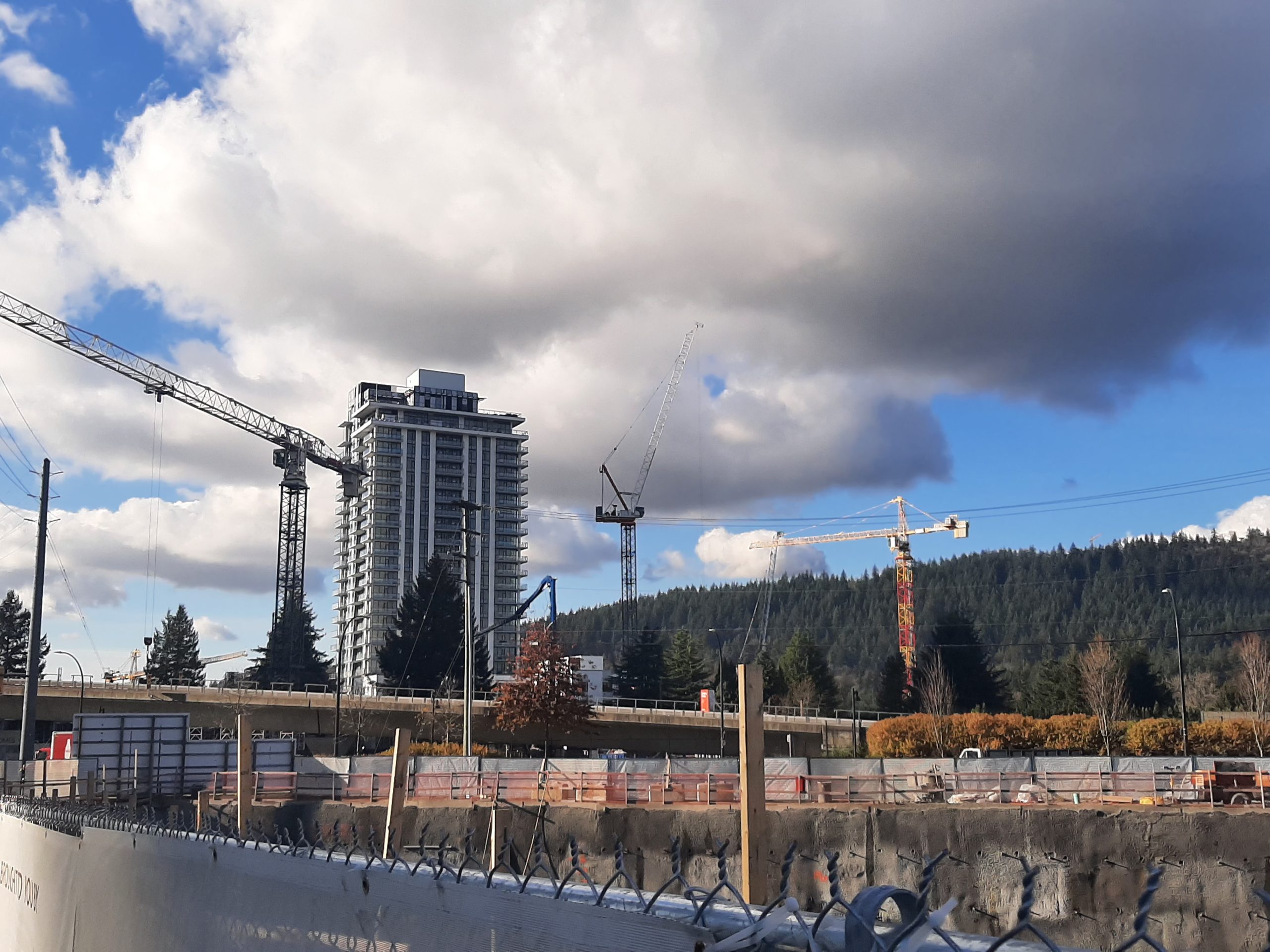
“All throughout Moody Centre we’re going to see things change dramatically in the next few decades,” said Fire Chief Darcey O’Riordan during a presentation to council on July 22. “There’s larger and more complex buildings that are replacing our older building stock.”
Local news that matters to you
No one covers the Tri-Cities like we do. But we need your help to keep our community journalism sustainable.
With Port Moody’s population projected to more than double by 2050 – reaching as high as 74,800 – the plan anticipates growing pressure on Port Moody Fire Rescue (PMFR), which operates from two fire halls.
The plan identifies 8,533 new housing units across 16 major developments currently in the pipeline – expected to add more than 16,000 residents. Four major projects already approved – Wesgroup’s Coronation Park, Edgar Development’s Portwood, and Beedie Living and PCI Developments’ Moody Centre tower projects – account for more than 78 percent of that growth.
With densification now mandated under provincial housing legislation – including Bills 44 and 47 – fire services will face increasing pressure, particularly in high-density neighbourhoods where a single fire can affect hundreds of residents.
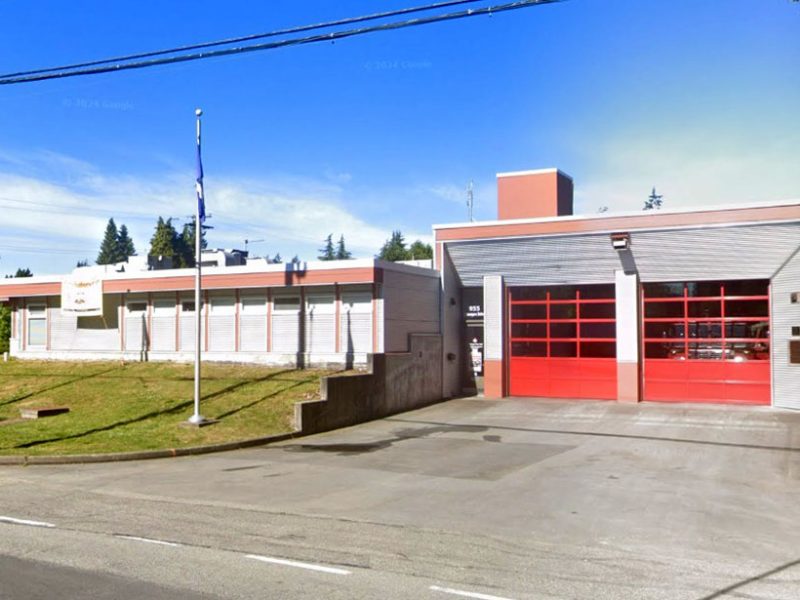
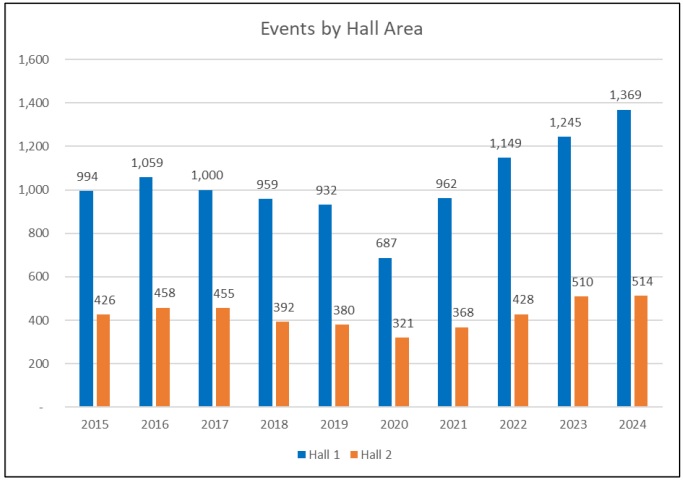
PMFRS is already experiencing a significant bump in the number of emergency incidents, jumping 29 percent from 2021 to 2024.
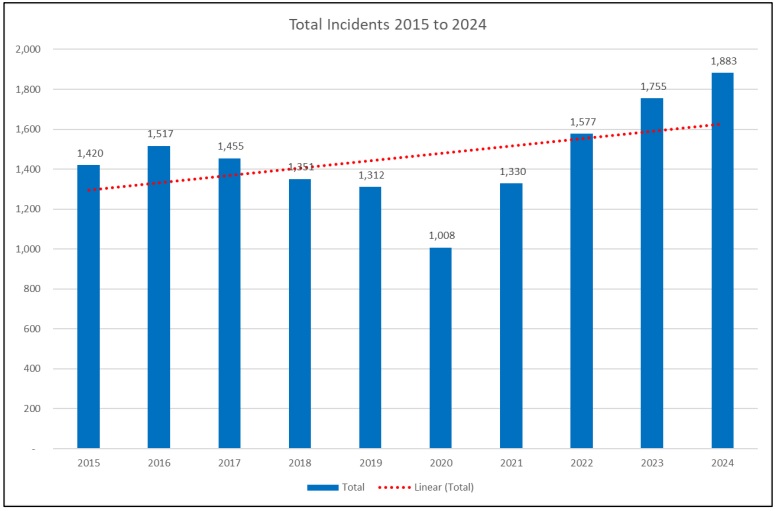
To meet these demands, the plan calls for replacing Fire Hall No. 2 in the Glenayre neighbourhood.
While Fire Hall No. 1 in Inlet Centre was rebuilt in 2014 and should be viable for another 50 years, Hall 2 dates back to 1977 and is poorly situated to serve the fast-growing west side of the city.
O’Riordan described the hall as “past its useful life,” adding that a study needs to identify a location for a modern facility, possibly located adjacent to new civic amenities or housing.
This type of integrated model, used in cities like Vancouver, would allow Port Moody to maximize limited land and deliver multiple public benefits, according to the plan.
O’Riordan said their consultant suggested the optimal location would be in the areas of St Johns and Clarke streets, between the Barnett Highway and Kyle Street.
Data shows Fire Hall 1 has been responding to a growing majority of calls for years, jumping from 57 percent in 2015 to 73 percent in 2024.
The city will also need to strengthen its contingent of on-duty firefighters per shift, describing the staffing model as a “priority.”
Port Moody currently has 10 firefighters on duty at any time — well below the 16 recommended by national standards to respond safely to a residential structure fire.
The plan urges the city to increase staffing in phases to reach this threshold.
O’Riordan said the first hiring phase (to 2027) will end with 10 firefighters on duty per shift, while the second phase (2028 to 2032) will end with 12 firefighters per shift, allowing a third fire apparatus to be fully manned at all times.
“The critical incident response is what really matters – those calls where we need people to be on scene within minutes,” O’Riordan said. “Those are always the critical life saving interventions.”
The plan also calls for formalizing automatic aid agreements with neighbouring Coquitlam and updating the city’s 1995 mutual aid agreement.
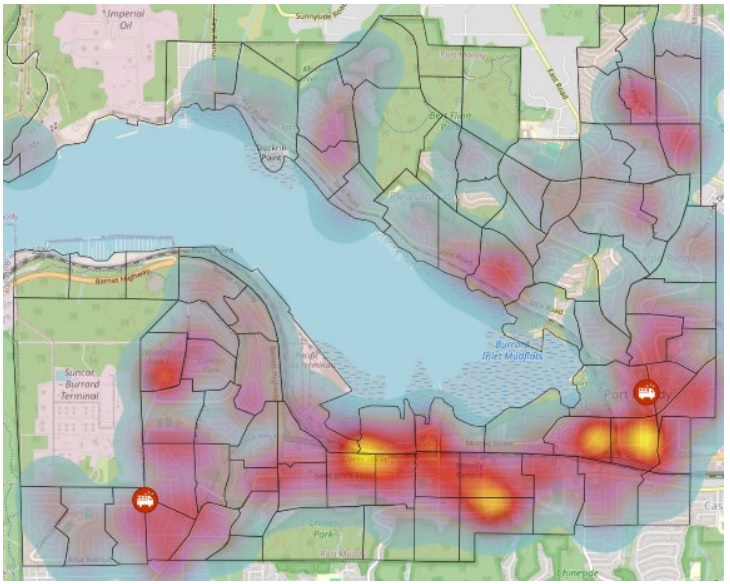
PMFRS’s update also identifies significant new provincial legislation and regulations that are reshaping how local fire departments operate – and requiring updates to bylaws, training, staffing, and inspection programs.
One of the largest changes regards the Fire Safety Act, which came into force in August 2024. The new legislation mandates a risk-based compliance monitoring system for public buildings, shifting away from the former model of routine calendar-based inspections.
Municipal councils are now required to formally designate fire inspectors and investigators who meet new provincial training standards, and all inspection and enforcement activity must be documented and reported to the provincial fire commissioner on a monthly basis.
These changes will require Port Moody to materially update its Fire Protection and Emergency Response Bylaw, and establish new operational procedures to meet legal obligations.
Key training reforms include a plan to reinstate annual live fire training, standardize records, and formally adopt NFPA standards as the city’s training benchmark.
In parallel, the province has introduced new building code provisions that allow six-storey residential buildings with only one exit stairwell.
These buildings place greater demands on fire departments, which must demonstrate enhanced response capabilities, faster response times, and more frequent inspection oversight to ensure safety in the absence of a secondary exit.
The plan cautions that if Port Moody permits one-exit buildings, it must do so only in locations where the fire department can safely protect them, adding the department should continue to push the province to revise the policy.
O’Riordan noted that these changes were made without consultation with PMFRS, the Fire Chiefs Association of BC, nor the BC Professional Fire Fighters Association.
Meanwhile, Bills 44 and 47, passed in 2023, have mandated widespread densification and the creation of Transit-Oriented Development Areas (TODs) near SkyTrain stations.
These provincial directives are expected to significantly increase call volumes and fire prevention workload in Port Moody over the coming years.
The master plan recommends that city staff regularly review the impact of these housing policies on department resources and ensure that staffing, equipment, and training keep pace with the growth.
In total, the plan puts forward 41 recommendations, building on progress of an earlier 2023 draft, which was put on hold following the introduction of new provincial legislation and mandates.
Author