Port Coquitlam looks to modernize film production permitting as council flags gaps in data and local benefits
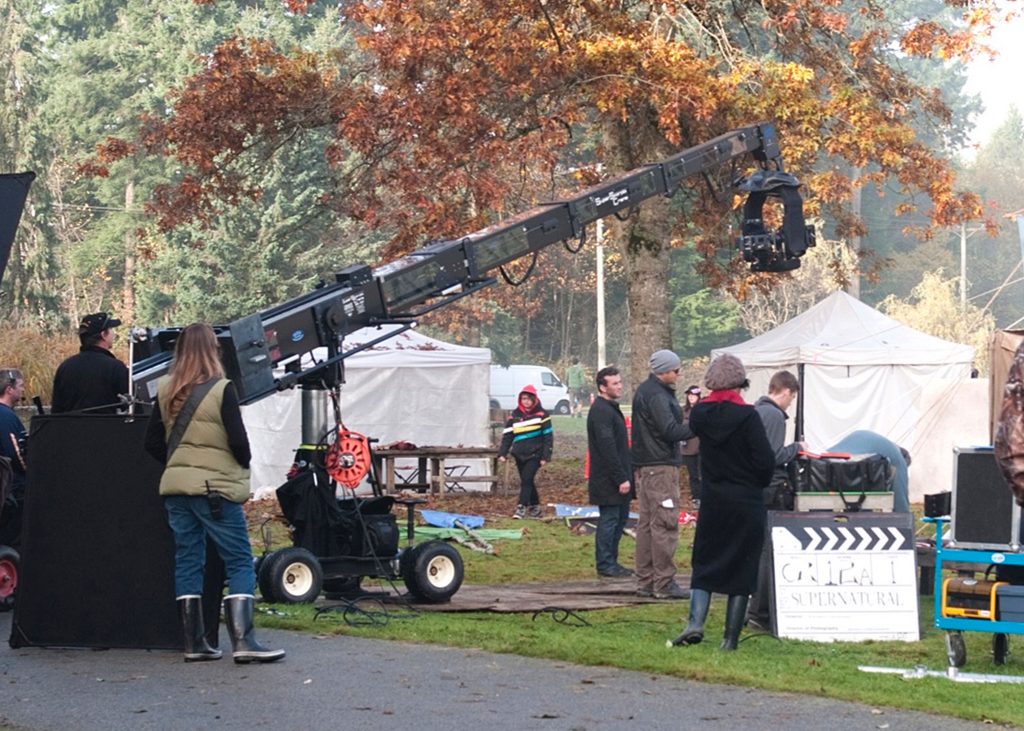
Port Coquitlam is moving to update how film productions operate in the city after council approved changes aimed at better balancing industry activity with impacts on downtown businesses and residents.
Council unanimously endorsed staff recommendations on March 10 to raise certain parking fees tied to filming and begin drafting a new comprehensive filming policy – changes staff say are needed to address gaps in the current framework and improve oversight of a growing industry presence.
“We need to do a better job at understanding the pros and the cons,” said Bruce Irvine, Port Coquitlam’s director of planning and development. “We’re anecdotal in our understanding at this time, we are not data driven in our understanding.”
Local news that matters to you
No one covers the Tri-Cities like we do. But we need your help to keep our community journalism sustainable.
The move comes as Port Coquitlam continues to attract productions seeking its “small-town aesthetic,” particularly in the downtown core, which has hosted roughly half of the city’s 41 productions over the past three years.
But during the discussion, both staff and councillors acknowledged the city currently lacks key tools to fully measure filming’s impacts or benefits.
Fees unchanged since 2018
Davin Gable, the city’s property use coordinator, told council the review was prompted by concerns about the way filming affects public parking and access in downtown areas.
“Downtown locations continue to be our most sought-after locations,” Gable said. “With that, it brings a lot of filming activity.”
While film productions can boost local spending and raise the city’s profile, Gable said they also bring disruptions, particularly when crews occupy parking lots or street parking.
The city’s fees have not been updated since 2018. Under the current system, productions pay a $750 permit fee, plus additional charges for using public spaces such as parking lots and streets.
Compared with neighbouring municipalities, Port Coquitlam’s base permit fee is relatively high, but many of its related location fees are lower. Staff found that a recent three-day production paid about $5,100 in Port Coquitlam, which is comparable but slightly less than nearby cities like Coquitlam, Burnaby and New Westminster.
Council agreed to increase downtown surface parking lot rental fees from $500 to $750 per day, as well as street parking charges from $150 to $250 per block per day.
Gable said the city currently does not differentiate fees by location, meaning filming downtown costs the same as filming anywhere else in the municipality.
“We felt the permits didn’t really reflect the value of those lots in the downtown,” he said.
Missing policy framework
One of the biggest gaps identified by staff is the absence of a formal filming policy.
Port Coquitlam once had an administrative film policy in the 1990s, but it was repealed around 2000 with plans to replace it alongside a new permit system – something that never occurred. Despite that, the city’s current permitting process still largely operates using practices based on that earlier policy.
As part of the update, staff will now draft a new legislative filming policy for council approval. The policy would formally define the permit process, establish expectations for productions, and improve transparency around how decisions are made.
Among the proposed changes is introducing a minimum five-day review period for permit applications. Staff say productions increasingly submit requests at the last minute, forcing city departments to coordinate approvals under tight timelines.
The city also plans to create a better system to track complaints and impacts tied to specific filming locations, which is data that is currently not systematically collected.
Councillors question economic benefits
Several councillors said the discussion highlighted another major gap: the city does not have clear data showing how much filming actually benefits local businesses.
Several councillors said the discussion highlighted another major gap: the city does not have clear data showing how much filming actually benefits local businesses.
Coun. Darrell Penner raised concerns that food trucks and service providers working with film crews often operate temporarily without local business licences, potentially taking customers away from established Port Coquitlam businesses.
He also questioned whether the city has any reliable way to measure the economic impact.
“The main reason that I believe we have filming here is to help out businesses,” Penner said. “The fundamental question is, how much business is actually generated by these companies? We have no way of tracking that.”
Penner suggested the city could create an incentive system that encourages productions to spend money locally, potentially offering reduced permit fees if they demonstrate purchases from local businesses.
Coun. Dean Washington echoed the concern, saying the city may be relying too heavily on claims from the film industry itself when assessing benefits.
“How do we know— instead of the film industry telling us— that people are happy about this?” Washington asked, suggesting the Downtown Port Coquitlam Business Improvement Association could help analyze the impacts.
Irvine agreed that the city lacks good data on the issue. He said modernizing the film policy could help the city develop better tracking systems for both the economic benefits and potential downsides of filming.
“If you create an incentive back, then they have to report, and they have to fill out the forms,” Irvine said. “That’s what we want to get to – not just self-reporting.”
While the changes approved Monday focus primarily on parking fees and policy development, staff said they should result in a modest increase in permit revenue while better reflecting the value of public land used by productions.
Staff will now return to council with proposed amendments to the city’s fees and charges bylaw and a new filming policy for formal approval.
The policy is expected to address permitting timelines, neighbourhood notification requirements, insurance and security deposits, and expectations for mitigating impacts on nearby businesses and residents.
In the meantime, councillors signalled they want future updates to provide clearer evidence of whether filming is delivering the economic boost the city is aiming for.
Author