Fees for Rocky Point Park’s boat launch set to increase 60% in 2024
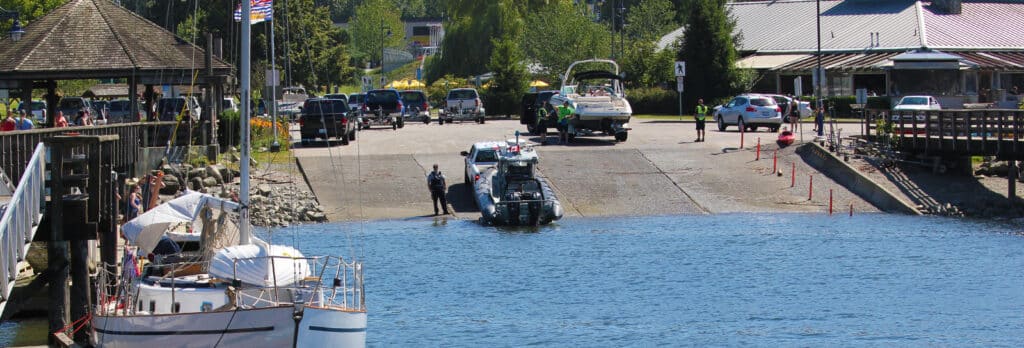
Rocky Point Park’s boat launch fees are going up . . . way up.
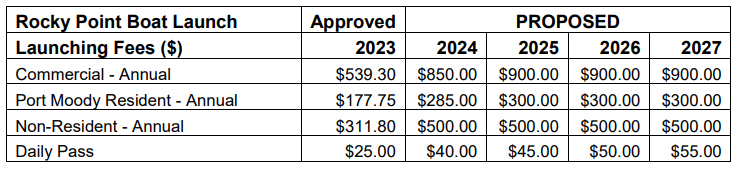
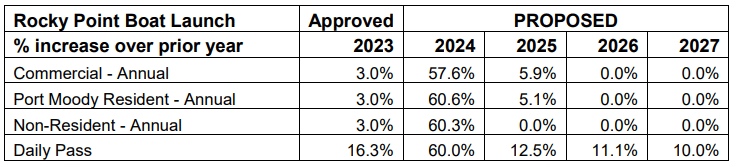
Port Moody council unanimously voted to approve a 100 percent user-pay model for the launch, which is projected to increase the price of annual passes and daily fees by 60 percent next year. For comparison, those fees only increased three percent in 2023.
Further annual increases from five to 13 percent are scheduled until 2027.
Local news that matters to you
No one covers the Tri-Cities like we do. But we need your help to keep our community journalism sustainable.
Coun. Callan Morrison, who introduced the motion back in April, said he didn’t think the daily fee increase from the current $25 to $55 by 2027 was excessive, considering it includes parking.
“I appreciate there are boaters in the community who will not be fans of an increase, and I understand completely, costs are increasing everywhere,” Morrison said. “I think that it’s important for our council to look at what things our residents are subsidizing, how much we’re paying for it, and who it serves in our community.”
The municipality has been burdened by a spike in dredging costs at the Port Moody Arm, which needs to be done every five years to remove sediment buildup around the boat launch.
In 2016, the dredging budget was only $250,000, but that expense swelled to $750,000 after a number of toxic contaminants were found in the sediment during testing.
Consequently, the dredged sediment can no longer be dumped in the ocean, instead requiring disposal on land.
With the move to a user-pay model, the municipality is estimated to rake in over $194,000 next year; by 2027, the revenue is expected to hit $251,000 – an estimated 131 percent increase.
Port Moody residents who pay annual boat fees will still receive a 57 percent discount compared to non-residents.
The funds will be transferred to the reserves to cover the costs of the next dredging project.
Tyson Ganske, the city’s deputy chief financial officer, said staff will need to track the model’s success and may need to make changes based on user behaviour.
An old resolution from 1984 allowed Burnaby residents to receive the same discount as local residents for annual boat launch fees, due to a capital contribution towards its construction.
But staff said that policy should be reconsidered.
“Staff do feel that that commitment has been fulfilled, it’s been almost 40 years since that agreement was signed,” said Paul Rockwood, general manager of finance and technology.
The city’s move represents a recent shift in local governance away from shared costs for regional amenities.
Staff presented data from 2023 that showed that, out of the 80 annual boat launch passes sold, 30 were sold to non-Port Moody residents, including eight from Burnaby.
Council suggested Port Moody citizens should not be subsidizing a recreational service used widely by residents from neighbouring communities.
Instead Port Moody is moving towards an “us-first approach” to recreational services, as one councillor described it.
Coun. Samantha Agtarap said it was unfortunate, but council feels like it is being pushed in this direction by other municipalities.
The city’s current approach, taking step-by-step decisions in re-evaluating programs and pricing, seems like an interim solution, said Coun. Haven Lurbiecki.
Both Agtarap and Lurbiecki voiced support for more collaboration with neighboring municipalities in the future.
In a similar vein, Mayor Meghan Lahti introduced an amendment to not unilaterally remove preferential pricing for Burnaby residents without consultation.
She said the city should notify Burnaby first and wait for feedback.
“Although I don’t disagree with (the policy change) . . . I’m concerned about relationships with our neighboring municipality,” Lahti said.
Morrison suggested the cities could potentially trade subsidies for their residents.
The new fee rates are set to take effect Jan. 1, 2024.
Author