EV battery business charges from the Tri-Cities to Texas
It started with freezing rain.
Between the polar vortex and large-scale shifts in atmospheric pressure, it was like the front door swung open and let the coldest winds the Earth could offer roll over Texas.
Over 10 days in February 2021, a deep freeze blanketed the state, resulting in 57 deaths, billions in property damage, and 4.5 million homes losing power, according to an assessment from the University of Texas at Austin.
Local news that matters to you
No one covers the Tri-Cities like we do. But we need your help to keep our community journalism sustainable.
Four years later, Coquitlam-based EV battery repurposing company Moment Energy is set to open a factory in the Lone Star State in a bid to buck up the power grid.
The company, which started in Port Coquitlam before moving to Coquitlam, recently received $20.3 million from the United States Department of Energy to help fund the Texas project.
That money represents a “pivotal milestone,” for the company, according to Moment Energy CEO Edwrd Chiang.
While their approach may change, the company is currently focused on distributed energy, Chiang explained.
As demands for electricity increase, retired EV batteries can help meet that demand.
“Our vision is every manufacturing building, commercial tower, neighbourhood block, would have its own dedicated energy storage,” he said.
While power outages would still happen, that system would harness used EV batteries to prevent an entire city from plunging into blackness.
It might seem impractical but, as Chiang explains, a large portion of EV batteries are clocking out before they put in a full day’s work.
Early retirement
Once an electric vehicle has taken its last charge, the battery is shipped overseas, railroaded or driven (and sometimes all three) to Moment Energy.
Technicians in the Coquitlam factory crack open the meter-long battery and look for the guilty party.
It’s like those old Christmas lights where one bad bulb spoiled the whole string, Chiang explains. With EV batteries, their might be one faulty module that needs to be recycled and another seven modules that still have 90 to 95 percent of their original power.
Besides keeping that battery from the landfill, they can put those modules to use without spending millions for infrastructure.
In 2024, the company announced a deal to provide fast charging for YVR fleet vehicles. The $800,000 project is likely far less than it would cost for new transformers and upgraded power lines, Chiang explained.
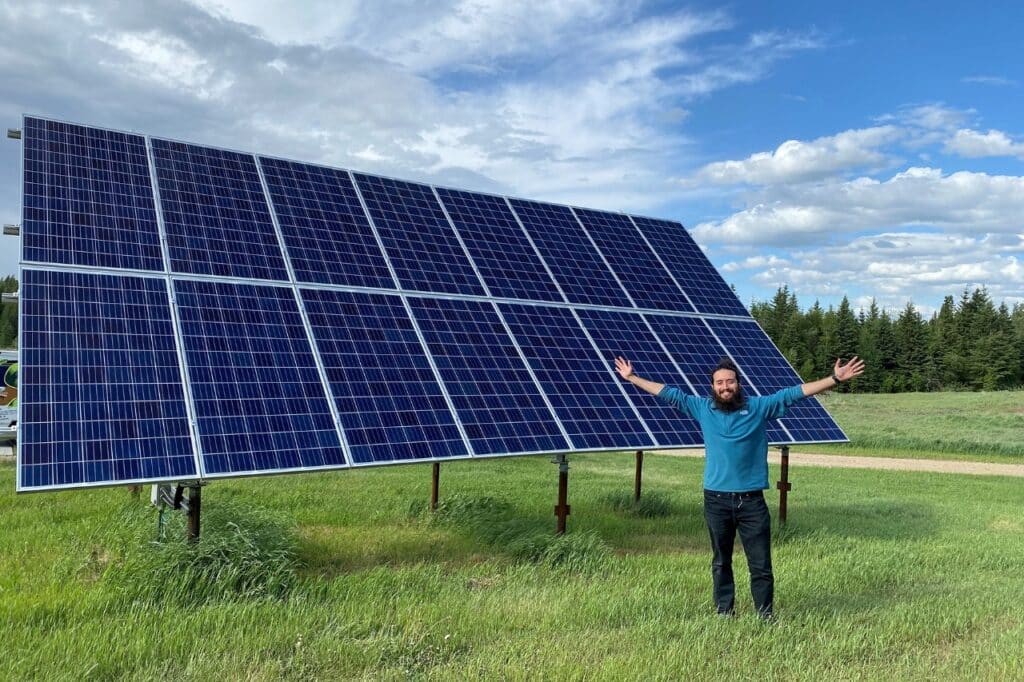
They’re also helping provide consistent power for Tofino General Hospital and boosted off-grid power in God’s Pocket – a diving resort north of Port Hardy.
The resort had been entirely powered by diesel generators. However, the project cut diesel consumption by two-thirds, Chiang reported.
Hitting the road
EV sales have spiked in recent years, with analyst S&P Global predicting EVs will account for more than 25 percent of new car sales by 2030.
EVs have become more expensive for Canadians, with the federal government recently reversing an incentive program that helped cover the cost of buying an EV.
The program’s funds were running thin due to a “surge of interest,” according to reporting by CBC.
In the first three quarters of 2024, Canadians bought more than 189,000 new EVs – a 38 percent boost from 2023 and nearly triple the figure from the same period in 2021.
Grappling with those lithium-ion batteries – some of which weigh around 1,000 pounds – is a daunting task, Chiang recognized.
“When we’re manufacturing at our current scale, we’re making such a small dent in the massive environmental problem,” he said.
Recycling an EV can cost a customer about $4,000, Chiang said.
“A consumer should not be paying that bill. It should mainly be the automaker.”
In Europe and China, automakers are legally required to take responsibility for old batteries.
“California’s moving toward that as well,” he said. “Usually when California passes it, both Canada federally as well as the United States federally would match it.”
That change would push automakers to look for partners for repurposing rather than recycling.
It’s part of the reason the company is expanding.
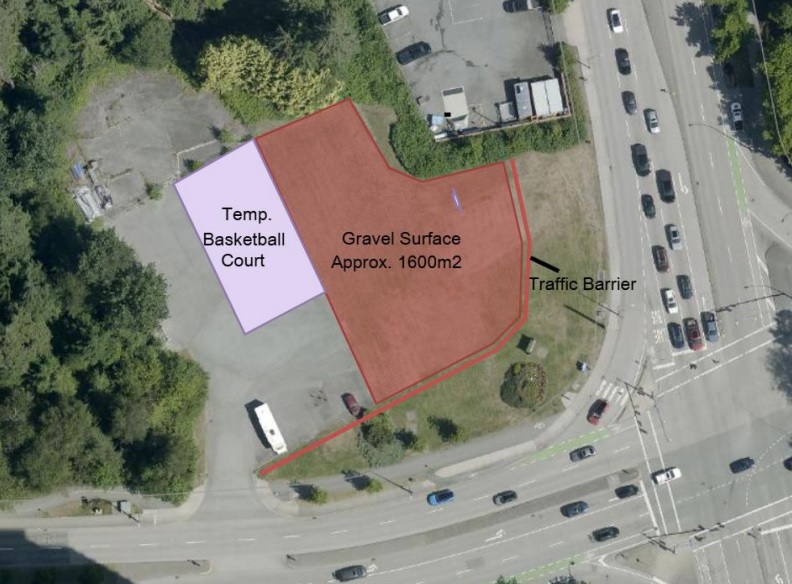
Initially, the company worked out of an approximately 4,000 square-foot facility in Port Coquitlam. After outgrowing the facility, the set up shop in a 15,000 square foot facility in Coquitlam before promptly grabbing another 5,000 square feet after their neighbour moved out.
“We just don’t have enough space to manufacture,” Chiang said. “Already we just have too many batteries.”
The company plans to move into a 50,000 square foot facility in 2026, he added.
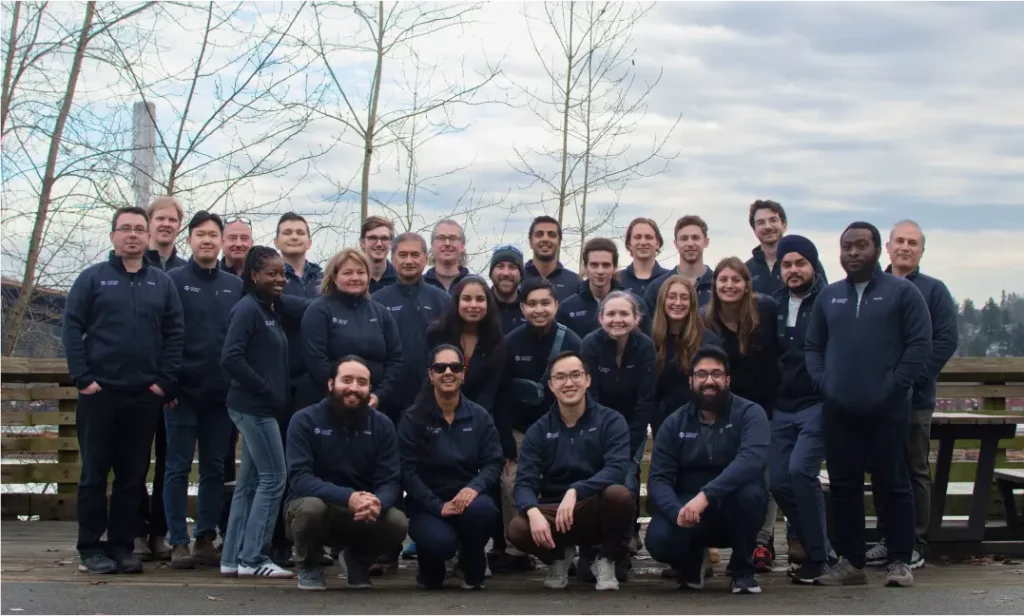
The company was started in 2020 by four Simon Fraser University engineering students Chiang, Sumreen Rattan, Gurmesh Sidhu and Gabriel Soares.

After starting out with four employees in 2021, the company now has 45 workers on the payroll and job postings for another 13. In the near term, Chiang sad they expect to hire between 90 and 100 technicians and engineers.
The company’s plan is to stay in the Tri-Cities, Chiang said.
“I just moved to Port Moody.”
Author