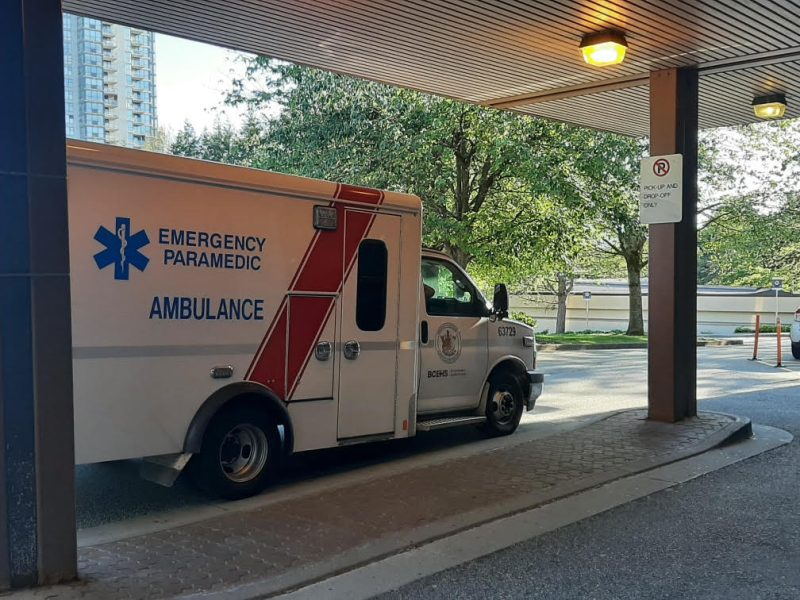
Eagle Ridge anesthesiologist conducts zero-gravity experiments
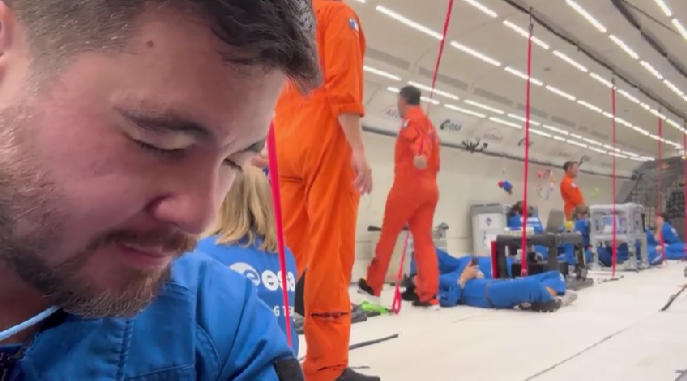
For a while, it feels like a ride in any other plane.
Then the plane’s nose whips up like a bloodhound catching the scent of a T-bone steak and gravity becomes a forceful force, shoving you down with nearly double your body weight.
But as the floor holds you in a vise grip, the nose dips. The plane goes level. Gravity clears out like a moocher fleeing a restaurant when the bill arrives. And as you’re floating through the plane, figuring out how to control your body, it’s time for science.
Local news that matters to you
No one covers the Tri-Cities like we do. But we need your help to keep our community journalism sustainable.
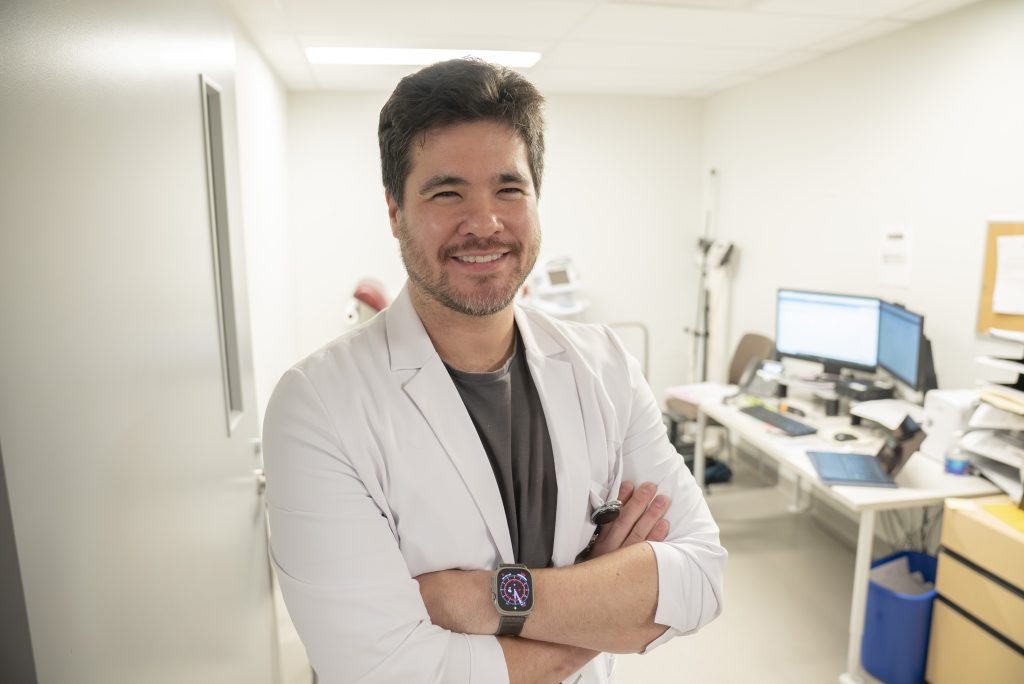
Dr. Matthew Turnock, an anesthesiologist who works at Eagle Ridge and Royal Columbian hospitals, recently recounted his flight on the Airbus A310 Zero G in France.
“It’s very hard to understand what it feels like until you’re actually there,” he explained in an interview with the Dispatch. “Like a rollercoaster . . . every time you experience that you feel like initially you’re falling.”
You get used to it, he added. But before that, there were some mild concerns.
“I thought that we were crashing into the ocean,” he said. “I actually genuinely thought we were all going to die.”
Zipping up and down like a crypto stock left Turnock disoriented at first.
“Your brain relies so much on gravity to tell what’s up from down. When you take that away, your brain has absolutely no way to make sense of what’s happening around it.”
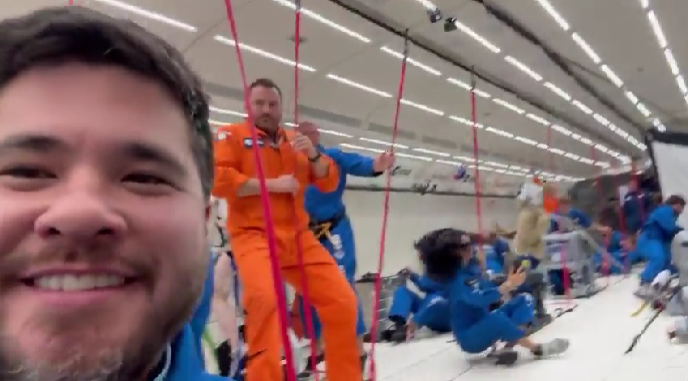
Nicknamed the “vomit comet,” the aircraft lets its passengers experience hypergravity – the equivalent of 1.8 times the gravity on Earth.
“After two or three parabolas, you really get used to it and then you kind of look forward to it because it’s kind of fun.”
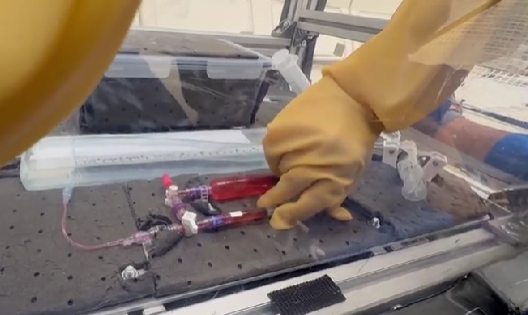
Supported by the European and Canadian space agencies, the flight was part of a two-year project intended to examine the feasibility of conducting medical procedures in space.
As an anesthetic gas could leak into the cabin and put an entire crew to sleep, Turnock and his fellow experimenters injected a 3D-printed model of the spinal canal.
Before the experiment, the fear was that the anesthetic could float up to the brain, creating a risk of seizures, breathing and heart problems. Instead, Turnock said the medication didn’t really spread at all.
Before they could even begin to consider using a human subject, the team will need to examine a host of variable include the speed of injection as well as the type and size of the dose.
“It’s not even close to what we have to get to,” he said.
However, the team, which includes doctors Alex Suen, Siobhan Wagner, and medical student Adrian Tabari, are already looking forward to testing new protocols when they board the AirBus in late 2026.
A fan of Star Trek and Star Wars, Turnock said he was excited to be picked for the experiment.
Anesthesiologists are “all a little bit nerdy on the side,” he said, noting many have backgrounds in engineering or computer science.
“Felt like my kind of people,” he said about choosing anesthesiology as his focus.
It’s no wonder he’s got his eyes on the stars.
“The holy grail would be to actually conduct the experiment on the International Space Station,” he said.
But while their attention is largely focused on space, the experiment may also have applications on Earth, particularly why anesthetics are sometimes ineffective.
“By removing gravity, it gives us a chance to look more closely at the other variables . . . and maybe get a better understanding of why it doesn’t work all the time and what we can do to make it more reliable to improve our care here on Earth.”
Author