Douglas College workshop focuses on urban forest protection
The event is open to everyone, and is happening tonight from 6:30 to 9:00 at Douglas College
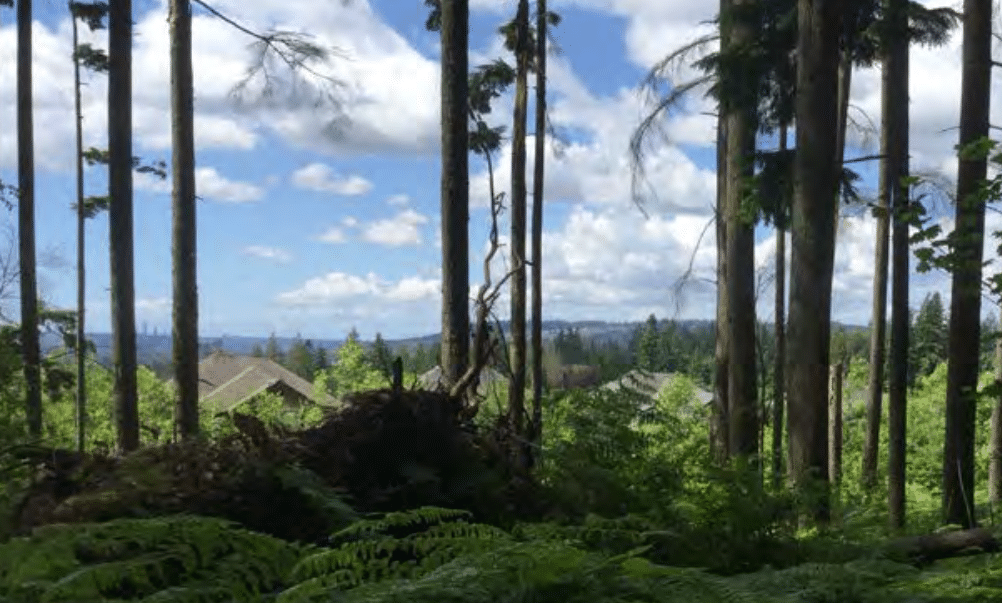
It’s about putting down roots and growing a movement.
Tonight’s Trees for a Changing Landscape workshop at Douglas College is meant to inspire attendees to plant trees in their neighborhood and to reach out to their elected representatives to advocate for urban forest retention and growth, explained organizer Nancy Furness.
To help with the former, red seal horticulturalists James Bobick and Derek Churchill, are each set to make presentations at the event. Bobick is slated to speak about the kind of trees people can plant that will do well in the changing climate, and Churchill is planning to discuss common landscaping mistakes. The City of Coquitlam is providing tree and compost giveaways.
Local news that matters to you
No one covers the Tri-Cities like we do. But we need your help to keep our community journalism sustainable.
For the latter call to action, Furness, who’s the founder of the Wondrous Tree Fellowship, said they’ve already engaged with municipalities. Port Moody has created an Urban Forest Management Strategy and Coquitlam is working on its own.
Port Moody’s current urban canopy (the amount of ground area covered by trees from a bird’s eye view) is at 28 percent outside parks and industrial lands, and their target it is to increase the canopy to 31 percent by 2050. City-wide it’s 58 percent, with a target to increase that to 59 percent.
“But the problem now is with the provincial legislation,” Furness said. “We’ve got that whole other layer of complexity with the provincial government putting mandatory densification.”
The province’s housing legislation requires municipalities to change their zoning to allow for greater housing density and can override municipal policies that protect trees.
“We will be asking folks to ask for either legislation to be amended . . . to include tree protection or to have some form of tree protection put in there at the provincial level,” Furness said.
There needs to be a balance between building the “much needed housing” and “making sure that housing is climate resilient,” Furness explained.
“It’s not an easy ask, because it should be done in parallel with densification, and we’re not seeing it. So, we’re kind of behind the eight ball now, because densification is going full speed ahead.”
Tree equity
Furness is also set to present on tree equity at the workshop, which is the idea that all communities (regardless of race, age or socioeconomic status) should have access to the benefits provided by urban forests. Those benefits include cooling the air, managing stormwater, reducing pollution, and improving mental health.
Port Moody’s tree equity mapping found that the Glenayre and Moody Centre areas had the lowest tree equity score — or the lowest number of trees. Furness said Coquitlam and Port Coquitlam have yet to publish tree equity maps.
She said she’s worried increasing housing densification will, “unintentionally [create] new areas of tree inequity, just based on the fact that all the trees are coming down in areas and buildings are going up,” she said.
The workshop is free of charge, and will be held tonight from 6:30 to 9:00 p.m. at Douglas College in Coquitlam, 1250 Pinetree Way, in Lecture Theatre A1470. It’s hosted by the Wondrous Tree Fellowship, in partnership with the Burke Mountain Naturalists and TriCities Urban Working Group.