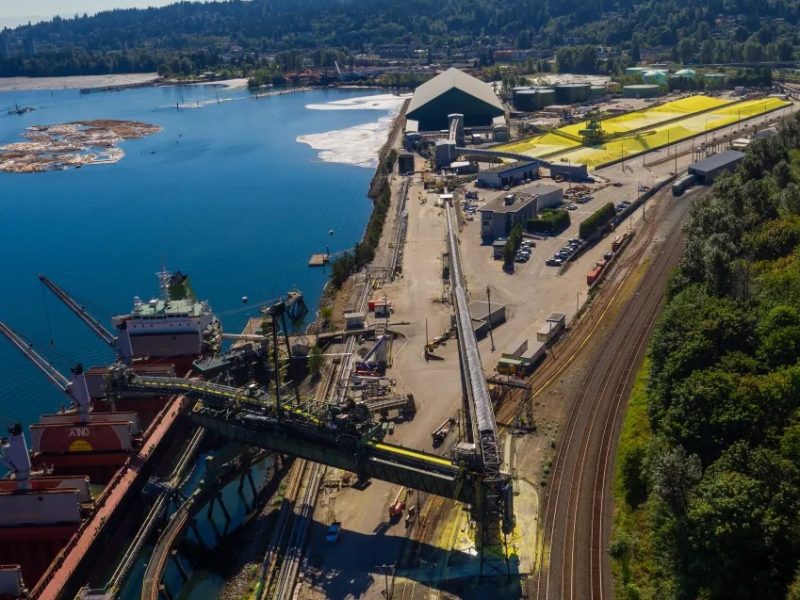
Port Moody backs Coronation Park changes despite concerns over ‘subpar’ affordability and job delays
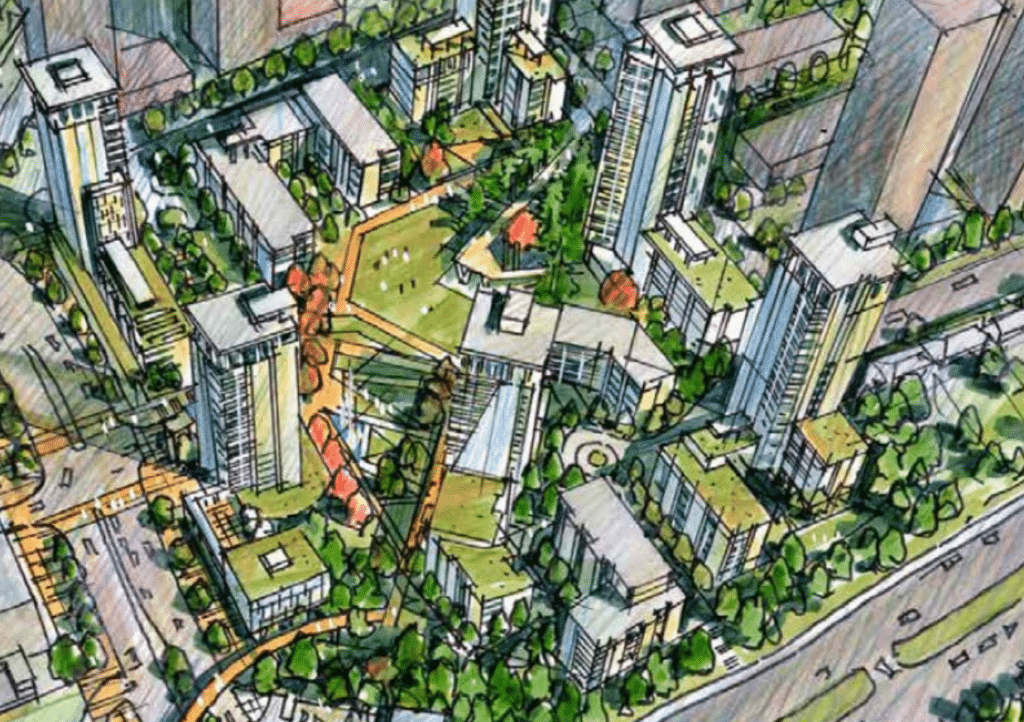
Port Moody council has approved a substantial amendment for the Coronation Park development, trading an office building for hundreds of rental homes, a quarter of which are below market.
The Sept. 16 vote was unanimous, though not without concern over the delay of employment space, the loss of seniors housing, and the below-market housing not meeting the city’s affordability standards.
“We’re not going to get everything we want in one project, but the hope is we get everything we want over many different projects,” said Coun. Samantha Agtarap. “I think everybody’s just trying to make the best of a difficult situation in terms of the economy and the market right now.”
Local news that matters to you
No one covers the Tri-Cities like we do. But we need your help to keep our community journalism sustainable.
After rezoning was approved in 2023, there was significant concern raised around the community regarding the complete lack of affordable units in the largest development in the city’s history.
Wesgroup Properties submitted a letter of intent to council, indicating they were willing to explore adding more affordability to the project in exchange for increased density.
Tuesday’s approval allows the company to scrap a six-story purpose-built office building, replacing it with an eight-storey rental building.
Another 26-storey tower, originally slated for strata condos, will also be switched to all-rental.
Together, the changes boost the first phase’s rental count from 101 units to 323. Of these, 86 – all studies and one-bedrooms – will be secured as below-market for 20 years, with rents capped at $1,795 under a Canada Mortgage and Housing Corporation (CMHC) financing program. After that period, the units will revert to regular market rental.
The office space will not be completely eliminated but shifted to the third phase, years later in the build-out, and embedded into the second and third floors of two residential towers.
Affordable housing – or not?
Staff warned the below-market units fall short of Port Moody’s Inclusionary Zoning policy on almost every front:
- Length of affordability: 20 years versus the city’s standard of 60 years, or the life of the building.
- Unit mix: 100 percent studios and one-bedrooms, with no family-sized two or three-bedroom units, contrary to policy requiring at least 35 percent family units.
- Rent levels: Proposed rent is about $490 higher than city policy would allow for a one-bedroom.
- Income thresholds: Eligibility is set at $107,720 (median family income in Metro Vancouver) rather than the BC Housing benchmark of $58,000.
Coun. Haven Lurbiecki delivered the sharpest critique, saying council was settling for “subpar” affordability.
“It literally does not meet any of our requirements,” she said. “If it’s not meeting our requirements as a city, it is not meeting our needs as a city.”
She argued the city is overproducing studios and one-bedrooms — more than 3,000 approved in recent years, compared to a five-year target of about 900 — while falling behind on family-sized units.
“These rents are not affordable. This is not affordable housing,” Lurbiecki said. “All to get this bit of below market that doesn’t actually meet any of our needs.”
Slowing job growth
Lurbiecki also objected to the loss of the first-phase office building, calling it a broken commitment that weakens the project’s contribution to the local economy.
She moved an amendment – which staff’s report recommended – to relocate the office to the second phase, closer to the Inlet Centre SkyTrain station and planned pedestrian overpass, but the motion was defeated by a 4-3 vote.
City staff had cautioned that moving the office building to the third phase would delay about 230 jobs – 44 percent of the total employment the project was expected to deliver.
The Ioco Road location had been strategically chosen to support transit-oriented employment growth. With few other office projects on the horizon, staff warned Port Moody risks constraining job growth and losing businesses to other municipalities.
While staff admitted the suburban office market is still soft, they said an inventory scan showed that Port Moody’s commercial vacancy rate is under 4 percent – six units total are available for lease. They also noted Tri-Cities had some of the highest suburban rents in the region.
Staff said this shows demand for high-quality office space exists – but Coronation Park will now not deliver it for years.
However, Dean Johnson, vice-president of development at Wesgroup, told council that delaying the office space was the only feasible option, adding relocating it to the third phase site made more sense from a planning perspective.
He said the second phase site was a quiet residential neighbourhood, ill-suited for business spaces.
“It’s a little counterintuitive,” Johnson said. “But introducing an office use in there with trucks and access and loading wasn’t really complementary to the neighborhood vision that we created.”
Johnson also said there is currently no market demand for commercial office space, and banks are not approving financing.
“We have had a number of conversations with financial institutions on a number of products across our portfolio. There is no financing available for an office building in the Lower Mainland – period, full stop.”
Support for compromise
Other councillors acknowledged the shortcomings but stressed the urgency of delivering rental supply.
Coun. Diana Dilworth, while expressing frustration that the project’s occupancy date has now slipped to 2029, said the trade-off was worth it.
“We always have the opportunity in future phases to re-evaluate and review commercial or review inclusionary zoning at a time when market viability allows for it,” Dilworth said. “I’m happy to see this go ahead, and I hope we can get a shovel in the ground.”
Dilworth also pointed out Wesgroup’s experience: nearly 30 percent of the 5,200 CMHC-backed rentals built in Metro Vancouver have been delivered by the developer.
“This is business as usual for them. This is not anything new or tricky. It’s the way we need to be doing business.”
Coun. Kyla Knowles said keeping the office in the first development phase would have been financially impossible and risked stalling the entire project.
“We know it’s not going to be viable if it comes in Phase A. We know that the market is not currently able to absorb commercial units,” she said.
Knowles also emphasized that the CMHC funding opportunity required rental density in the first phase, calling it “about as good as we’re going to get.”
She also criticized past councils for failing to secure affordable housing in the original rezoning, adding it wouldn’t be fair to hold Wesgroup “hostage” to the inclusionary zoning policy after council itself had requested the developer explore options.
“If we had negotiated in the same good faith with Wesgroup as Coquitlam did with Polygon years ago, we may have gotten taller towers, but I can tell you we would have gotten affordable housing.”
Coun. Amy Lubik admitted she was concerned about the lack of family-sized affordable units but still backed the amendment.
“Although it’s not the amount of affordability that I would really like to see, it will help some people, and we know people across the entire spectrum are struggling right now,” she said.
Coun. Callan Morrison praised Wesgroup for following through on the letter of intent, noting many Metro Vancouver projects are collapsing in today’s high-cost environment.
“There needs to be flexibility at this council table and in negotiations,” Morrison said. “Saying that we’re going to be able to deliver everything our community needs in this first phase of this project is not realistic.”
Several councillors expressed regret at the loss, noting the community’s need for age-specific housing.
Next Steps
Before final adoption, Wesgroup must execute an updated development agreement and housing agreement bylaw. These documents will formalize the rental commitments, adjust community amenity contribution schedules, and remove the seniors housing obligation.
The developer must also submit a revised development permit for the first phase to reflect the redesigned buildings.
Council’s unanimous vote clears the way for construction to finally begin – more than two years after the 2024 rezoning.
Author