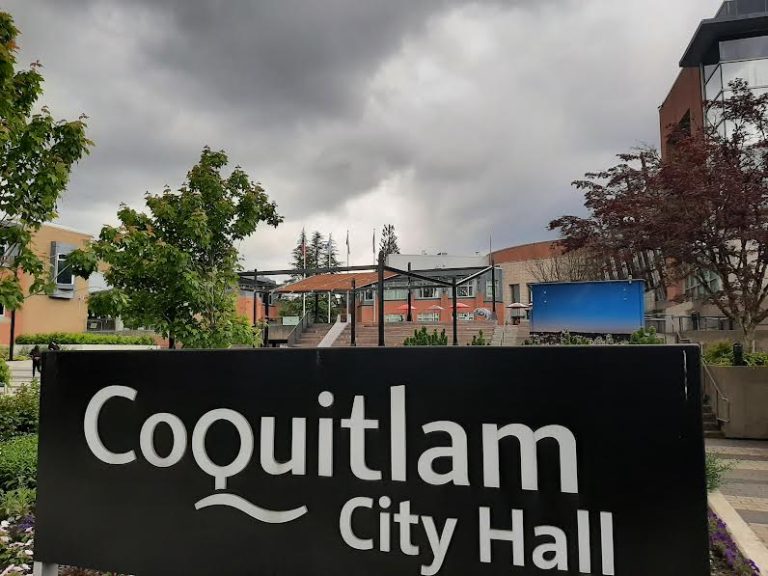
‘Three strikes and you’re out’ Coquitlam council takes tougher stance on construction noise, pollution, and parking

In May, a construction company operating in Coquitlam illegally discharged polluted water.
After being issued three notices by the city, the company was ordered to install a real time water quality monitoring system. The system tests water discharged at construction sites for pH and turbidity and mandates treatment of polluted water.
After being caught twice bypassing the treatment system, the city issued a stop work order.
Local news that matters to you
No one covers the Tri-Cities like we do. But we need your help to keep our community journalism sustainable.
For some city councillors, that incident is evidence the city is sparing the rod and spoiling bad construction companies.
“Three times is three times too many. I think the fish in the creek would agree with that as well,” said Coun. Trish Mandewo.
Despite real-time water monitoring now being mandatory at major construction sites in Coquitlam, Mandewo said she still gets calls about Stoney Creek.
There are challenges as construction dirt is sometimes tracked on roadways and washed into the creek, said the city’s director of engineering and public works Jaime Boan, adding there have also been incidents of residents dumping pollutants in catch basins.
Mandewo said she’d favour stop-work orders of up to 30 days for repeat offenders.
While there is an issue of due process, the city has generally issued fines and stop-work orders to incentivize compliance, not to be punitive, explained planning and development general manager Andrew Merrill.
When there’s a “level of intent” among the rule breakers, the city should be punitive, said Coun. Robert Mazzarolo.
“It has to send the message that this is not acceptable,” he said.
When it comes to repeat offenders, Coun. Dennis Marsden concurred.
“As Aaron Judge from the Yankees learned, three strikes and you’re out.”
The city’s plan to curb construction impacts includes escalated enforcement, site monitoring, and tickets – although those tickets are gentler than some would prefer.
“Postage is more expensive than our fines sometimes,” Mayor Richard Stewart said Monday.
While the city is lobbying the province for the authority to hand out fines up to $3,000, Coquitlam’s fines are currently capped at $500.
“Fines for certain developers are just the cost of doing business,” said Coun. Brent Asmundson.
Monday’s discussion touched on Coquitlam’s dual roles in both facilitating the construction of more housing while cracking down on companies that break rules.
The city has issued stop-work orders on seven sites this year. However, the physical signs affixed to construction sites are a bit too small, according to the mayor.
“I would like us to contemplate a big sign that says: The City of Coquitlam Has Stopped Work on This Site Because the Contractor is an Idiot, or something like that,” Stewart suggested, drawing laughs from his colleagues.
Neighbours need to know the city is responding, he added.
New provincial rules allow a minimum of three housing units on lots zoned for single-family, and for six units on single-family lots close to transit. Those rules could lead to increased construction in residential neighbourhoods, Stewart noted.
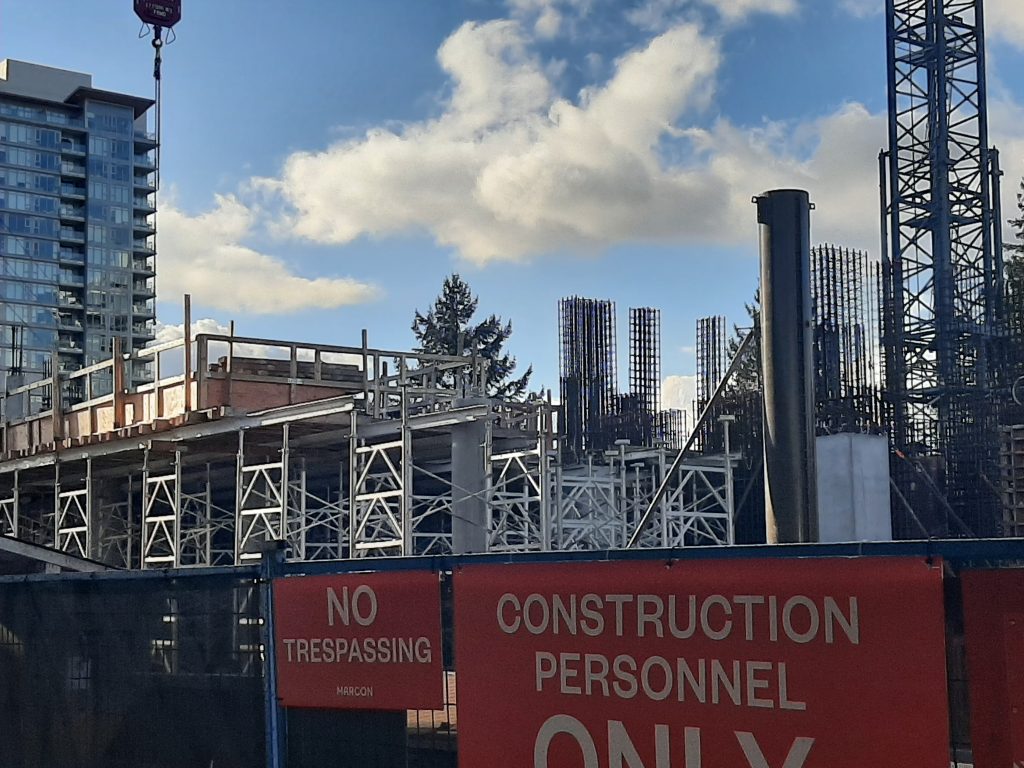
Besides the noise, dust and construction garbage, there can sometimes be serious safety risks, Stewart said, describing a site with exposed rebar.
“Everything goes to my mind as to how horrific that could be,” he said, noting some children have a tendency to play where they shouldn’t.
Construction sites need to be kept as clean as possible, the mayor emphasized.
“Nothing belongs in there unless it’s necessary to the construction,” Stewart concluded.
Over the past year, the city issued 23 fines for working outside permitted hours, 89 for noise complaints, and 122 fines for environmental violations. However, the most persistent issue has been parking, with the city handing out more than 1,000 tickets for: “unsafe or illegal parking near construction sites.”
Some construction companies have their workers parking on the street while an underground parkade remains vacant, said Coun. Matt Djonlic.
“I really think we need to push on that conversation,” he said.
However, the issue is sometimes complicated by contractors using the parkade for the storage of appliances and other items, according to city staff.
It would make sense for developers to alleviate parking problems by providing transit passes for workers and setting up storage for tools and other essentials, Asmundson said.
A common complaint is neighbourhoods dealing with overlapping construction projects, noted Coun. Steve Kim.
“What are we doing to help manage this?” he asked.
The city is looking to take more of a lead and rely less on developers coordinating with each other to ease impacts, according to city staff.
Author