Port Moody council slows 26-storey tower project, asks for larger family units and shorter podium
Port Moody council has put the brakes on fast-tracking a major high-density rental project in Moody Centre, rejecting staff’s recommendation to approve all three readings of a rezoning bylaw in one night.
Instead, Anthem Properties’ project was just advanced past first reading, with a list of changes requested by council regarding unit sizes, building massing and climate-resilient colouring.
“I think it needs to be very clear what we’re looking for as a council,” said Coun. Callan Morrison. “This is a dense project … so I think more could have been delivered.”
Local news that matters to you
No one covers the Tri-Cities like we do. But we need your help to keep our community journalism sustainable.
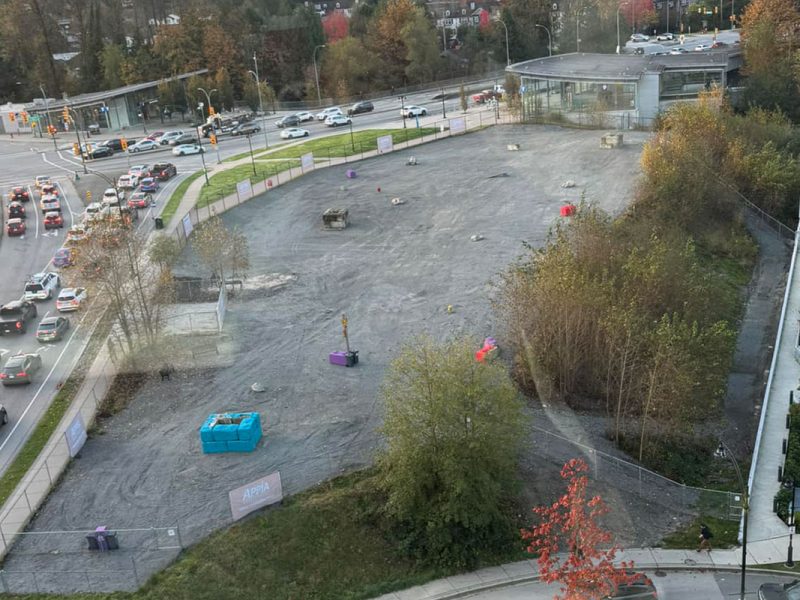
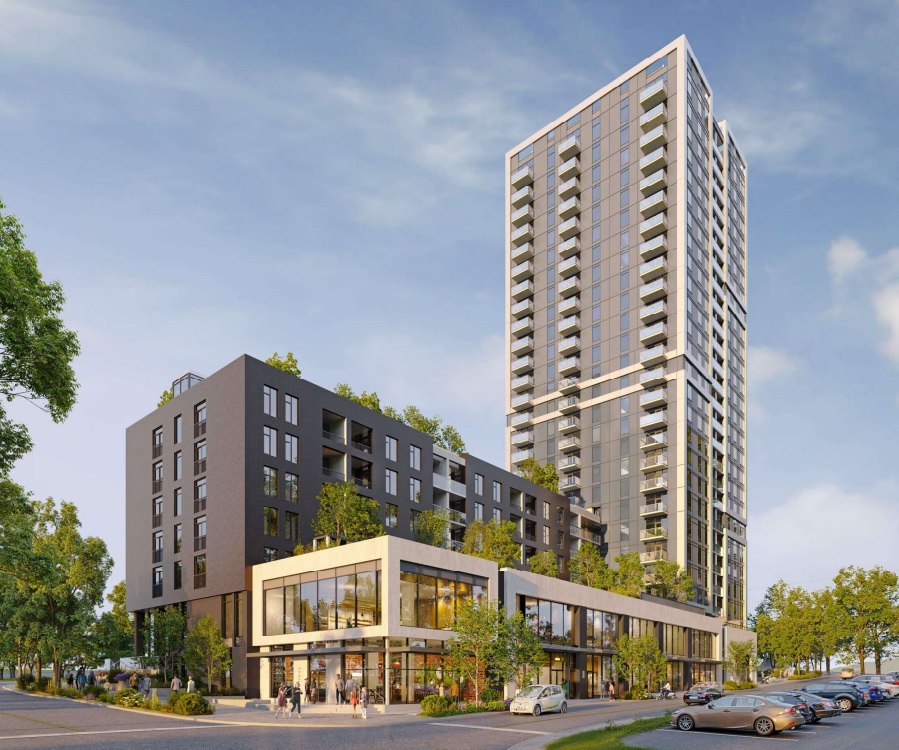
Anthem is looking to redevelopment lands at St. Johns Street, Williams Street, and Spring Street into a mixed-use complex anchored by a 26-storey purpose-built rental tower, a six-storey low-rise building and a two-storey commercial podium.
In total, there are 321 units alongside nearly 33,000 sq. ft. of retail and office space, plus a publicly accessible landscaped pedestrian connection linking St. Johns and Spring streets.
Staff had recommended council grant first, second, and third readings at once — a move that would have pushed the project directly toward a development agreement — noting the development complies with Port Moody’s official community plan (OCP) and provincial legislation that prohibits public hearings for OCP-consistent residential rezonings.
Some councillors, however, raised concerns about livability, density trade-offs, and how quickly major projects are being advanced under the city’s transit-oriented development (TOD) framework.
Dense rental build
According to the staff report, the building would range from compact 380 sq. ft. studio units up to three-bedroom units topping out around 1,044 sq. ft., with the overall unit mix meeting the city’s family-friendly housing policy by providing 35 percent two- and three-bedroom homes.
But staff also noted that when measured against BC Housing minimum size guidelines for minimum unit sizes, the largest homes fall well short of provincial standards.
Overall, 84 percent of the project’s units comply, but only 12 percent of the three-bedroom units met the minimum size.
That discrepancy became a focal point of council debate.
Coun. Samantha Agtarap questioned why the limited number of three-bedroom units were among the smallest in the building.
“Given there’s only 33 three-bedroom units … For me, the sticking point is that 12 percent,” she said.
The developer said the interlocking floor plate design limited flexibility.
“The way these tower floor plates come together, they’re like a Jenga block. If you add on to one suite you’re stealing from another,” the developer said, adding the company prioritizes efficient layouts over raw square footage.
The developer also noted that keeping units smaller helps keep rents lower, noting the building’s OCP-compliant floor area cannot expand.
Coun. Haven Lurbiecki rejected that logic outright.
“To suggest affordability through smaller size – I categorically reject that. That is not affordability; that is impacting people’s livability for the profits of industry.”
Agtarap ultimately proposed a compromise amendment requiring at least 50 percent of the three-bedroom units to meet BC Housing’s minimum size standards – a motion that passed with all councillors except Lurbiecki in favour.
Millions in amenities – but limited in-kind contributions
Staff highlighted that while the project delivers substantial financial contributions, it provides fewer physical amenities than some comparable TOD projects.
Anthem is offering a $4.8-million density bonus payment; over $650,00 in community amenity contributions; $672,000 dedicated to public art; and roughly $3.28 million in municipal development cost charges.
Altogether, the project would contribute approximately $8.73 million to the city over the approval and construction process
On-site amenities include indoor gyms and lounges, rooftop patios, community gardens, a dog run, and a mid-block landscaped plaza that will remain privately owned but secured for public access through a statutory right-of-way.
However, staff acknowledged earlier council concerns that with one of the higher densities in the TOD area, the project relies heavily on cash contributions rather than large in-kind community facilities.
Jobs delivered – but no child care
Staff said with the large amount of office and commercial space, they estimate the project would support approximately 175 jobs, up from the roughly 31 jobs currently on site – helping meet employment targets in the Moody Centre TOD framework.
But despite TOD policy encouraging child care spaces, the project includes none. Staff explained that child care delivery is being distributed across multiple developments in the area rather than required in every project.
That trade-off drew mixed reactions from councillors, with some accepting the area-wide approach and others questioning whether dense projects should contribute more directly to community infrastructure.
Concerns over massing, heat impacts
Beyond unit size, council also directed the developer to explore reducing the height of the six-storey low-rise building along St. Johns Street; and lighten the charcoal colour palette introduced since earlier design reviews to reduce urban heat island effects.
Coun. Amy Lubik noted that the darker façade ran counter to earlier design feedback encouraging lighter tones for climate resilience.
Coun. Callan Morrison warned the six-storey podium and low-rise elements could create a continuous “walling effect” along St. Johns Street, blocking views and shaping future TOD developments in ways council had previously hoped to avoid.
Process concerns and the three-reading push
One critique centred on why the staff sought to push the project through all three readings immediately.
Staff responded that the approach was determined jointly with the applicant since the development is OCP-compliant and predominantly residential.
Coun. Lurbiecki called the move “unprecedented,” arguing that major density approvals were being rushed with minimal public awareness. She said that the TOD framework had not yet been properly engaged on, and was not yet embedded into the OCP.
She said there was no documented evidence of broad community support for the “staggering density, and although she was open to taller buildings when they deliver on housing needs, the project did not meet that threshold.
“At the end of the day, this is more tiny unaffordable housing, and we have already approved literally thousands of units just like this,” Lurbiecki said. “I think it’s a poor deal for our community, offering little in the way of meaningful community amenities.”
Lurbiecki was the only councillor opposed to advancing the project past first reading.
Author