Trimmed-down Anmore South proposal set for public hearing following contentious council meeting
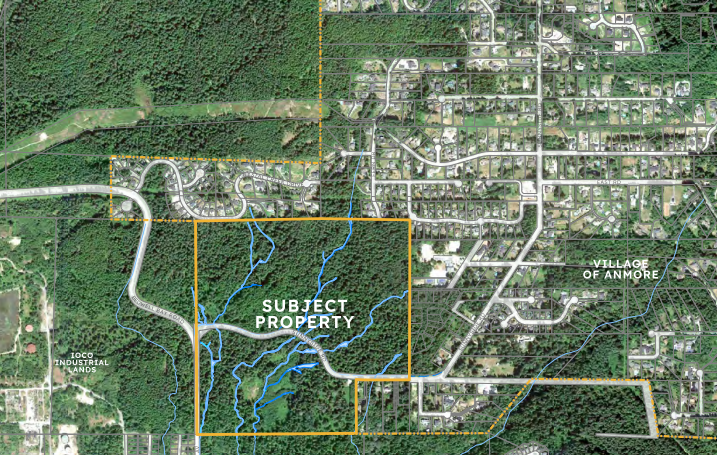
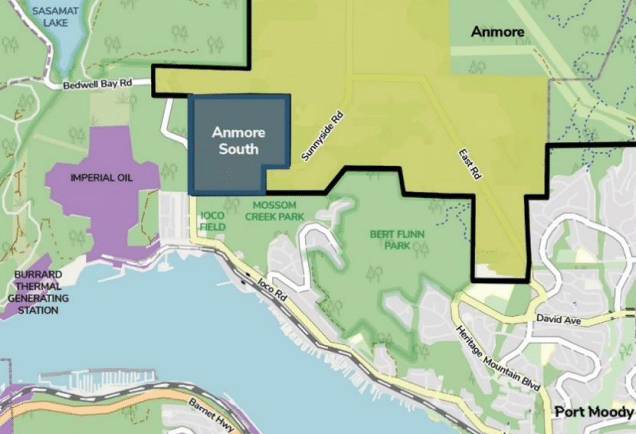
Despite a chorus of disapproval from the gallery, village council voted 4-1 to send the newly revised Anmore South project to a public hearing on Tuesday night.
Previously set to include 2,200 units of housing, Icona Properties recently cut the number of apartments in half, bumped up the portion of townhouses, and brought the total project down to 1,750 units of housing.
But while the proposal is smaller, the community opposition seemed large, frequently interrupting Tuesday’s meeting with cheers and applause despite repeated admonitions from Mayor John McEwen.
Local news that matters to you
No one covers the Tri-Cities like we do. But we need your help to keep our community journalism sustainable.
If approved, the development would kickstart a process that will transform Anmore from rural to urban, predicted Coun. Doug Richardson.
Richardson, who cast the only vote against moving the project to public hearing, said he would support the proposal if there was a benefit to the region, a benefit to the village, “or there was a strategic reason why we had to go against the wishes of the people.”
Sitting in for Greg Moore of Icona Properties, planner Paul Fenske said the proposal represented a “milestone moment.”
The project provides a diversity of housing, expands the tax base and reduces Anmore’s reliance on Port Moody, Fenske said.
“While having a developer finance connections to Metro Vancouver infrastructure; a $50-million investment, all which provides the village with future options,” Fenske added.
Richardson expressed skepticism regarding those financial benefits, suggesting any gains would be negated by the added costs of augmented police and fire departments as well as the planned rec centre.
Noting that Tuesday’s vote was strictly to send the project to public hearing, McEwen suggested Richardson could reserve his comments, eliciting an outcry from residents.
“If we’re going to change Anmore forever, we should have a good idea of what it’s going to look like,” Richardson concluded amid applause.
While financial details are vague at this stage, amenity contributions could be “in the many millions,” noted Coun. Kim Trowbridge.
Discussing the financial impact on Anmore, Coun. Paul Weverink suggested residents would likely get more for their money.
“Development doesn’t generally lower taxes,” he said. “It increases services.”
Given that the 151-acre parcel is held by one owner, there’s no way to craft an Official Community Plan amendment without the owner being: “intimately involved,” Weverink said.
“The landowner, who’s being very strategic, quite threatening in some ways, by saying they are going to do one-acre lots if we can’t come to some sort of agreement based on the process we always said we were going to follow,” he said, before being interrupted by boos from the gallery.
Weverink added that one-acre developments could happen. “I understand the business case,” he added.
It’s crucial residents recognize the way both the village and the housing market has changed, Weverink said.
“What we all bought into here 25 years ago was affordable,” he said. “None of that’s affordable now.”
It’s important the community explores the proposal, as “it’s the only thing that’s on the table,” he concluded.
“We have to think of future-proofing this village.”
After living in the village for 17 years, Hariette Chang said she’s never seen so much anxiety, confusion and division in Anmore.
“Have you ever seen the village council meetings so well-attended?” she asked.
Project revisions
The Anmore South project is now forecast to bring 3,900 new residents to the village, a reduction of 600.
The project is set to consist of 20 single-family homes, 120 duplexes, 960 townhouses and 650 apartments.
The community centre is slated to be about 20 percent smaller, shrinking from 20,000 to 16,000 square feet. The project would also see a drop in commercial and office space but would still include a grocery store and a pharmacy.
In terms of financial impacts, the net annual fiscal benefit of the revised project is forecast to be $611,000 – a reduction of about $85,000.
Author