An invasive weed was taking over the Coquitlam Crunch. It’s now being busted.
Scotch broom crowds out native plants and increases fire risk
Next month, Robbin Whachell plans to be out clearing an invasive plant from Coquitlam’s parks and trails.
This will be her fourth year running the Coquitlam chapter of BroomBusters, a non-profit dedicated to eliminating Scotch broom, an invasive shrub that came over from Europe as a garden plant in the 1850s.
Scotch broom spreads quickly in sunny, disturbed sites (like road sides). It’s now common on Vancouver Island, the Sunshine Coast, and across Metro Vancouver. It even competes for space with the notoriously invasive Himalayan blackberry, said Whachell.
Local news that matters to you
No one covers the Tri-Cities like we do. But we need your help to keep our community journalism sustainable.
Not only does it spread quickly, but it also crowds out native plants, is toxic to ungulates like deer, and worsens soil quality. Broom can also be a fire hazard due to the plant’s high oil content as well as its tendency to grow in thick patches, which increases fuel loads.
“If we didn’t start doing something, yeah, it would be a problem,” Whachell said, discussing Scotch broom in Coquitlam.
She first discovered Scotch broom during the 2021 heat dome when she was walking on the Coquitlam Crunch and heard popping sounds. Upon further inspection, she realized seed pods were popping in the heat.
She posted a video of it on social media, and a friend told her it was a Scotch broom. Whachell then contacted BroomBusters and started the Coquitlam branch in 2022.
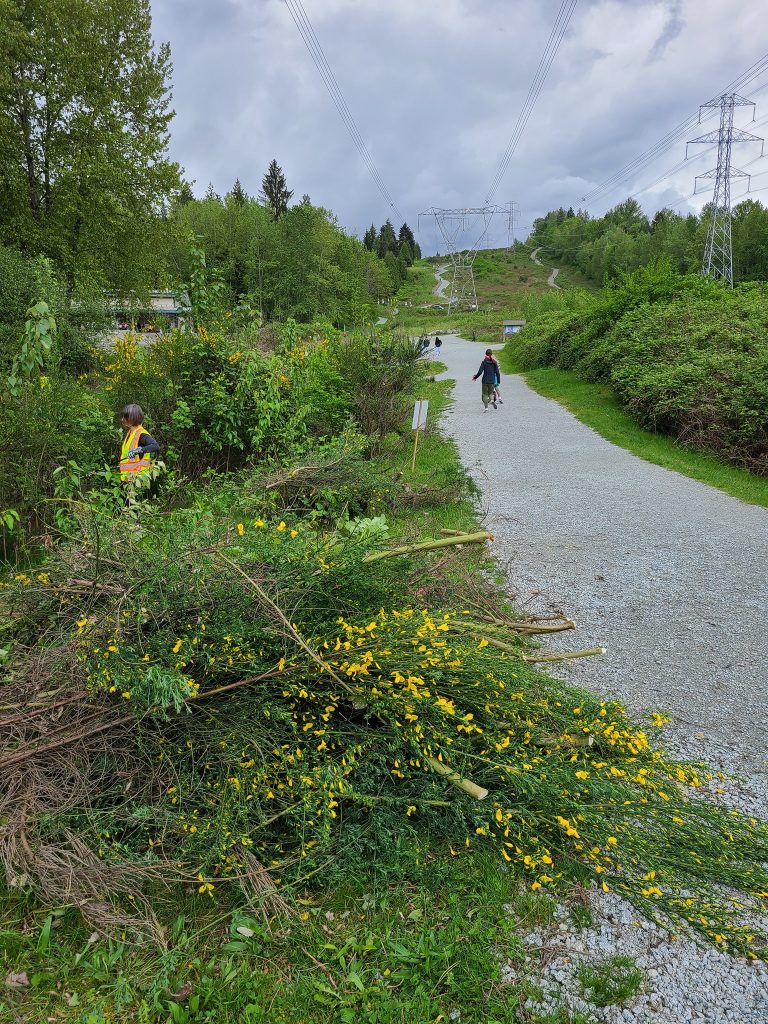
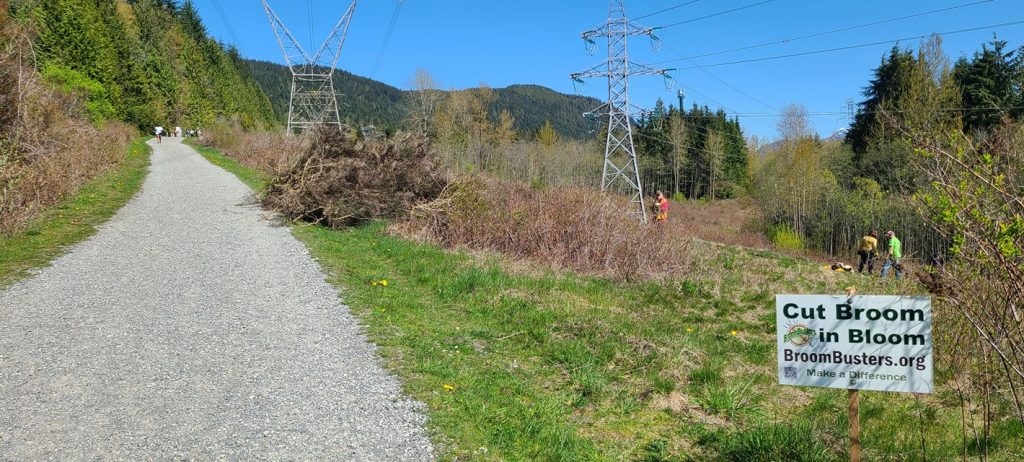
Since then, they’ve had more than 50 volunteers and worked with the City of Coquitlam to help clear the invasive plant. The group organizes what they call “community cuts” days in the spring to target the plant when it’s in bloom (so they don’t spread the seed). Volunteers use loppers to cut the shrub off at its root and the City of Coquitlam picks up the broom for disposal.
“Old growth is really gratifying to remove,” She said. “Once you get that base down, it’s quite rewarding to see areas completely changed.”
They had Mundy Park cleared by 2023 and the Coquitlam Crunch by 2024, as well as some from Town Centre Park.
“But here’s the thing, it grows back, and the seeds lay dormant,” Whachell said.
Each plant can produce up to 10,000 seeds per growing season that can survive in the ground for over 20 years. At maturity, seed pods split open, and can eject seeds up to five metres.
This is why they cut the plant at its base. If they pulled it out by the root, they’d be inadvertently pulling up all those dormant seeds to the surface, where they would get the light they need to grow.
It’s a hard plant to get rid of, and now Whachell says they’re working clearing out the new growth that’s sprung up since they’ve first cleared it.
“We’re really proud of the work we’ve done, it’s just shifting now.”