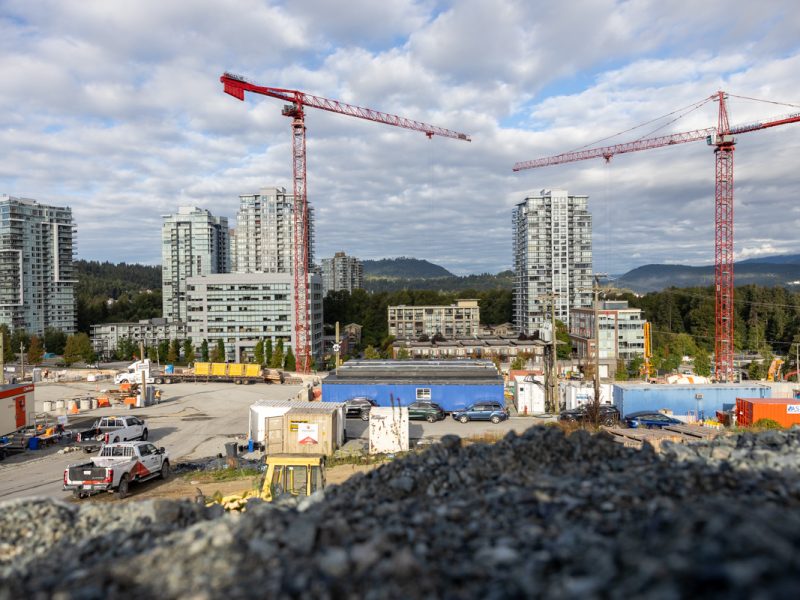
Investors own 19 percent of Coquitlam houses, condos

Coquitlam seems to be the most attractive spot in the Tri-Cities for investors.
Approximately 19.1 percent of Coquitlam houses and condos are owned by investors, according to data published by Statistics Canada from 2020. Investors, defined as people who either don’t live where they own or who own more places than they live, accounted for 13.3 percent of houses and condos in Port Coquitlam and 14.8 percent in Port Moody.
Those figures are a reflection of the fact that B.C. has: “a ton of mom-and-pop ownership of real estate,” explained Thomas Davidoff, director of the UBC Centre for Urban Economics and Real Estate.
Local news that matters to you
No one covers the Tri-Cities like we do. But we need your help to keep our community journalism sustainable.
“It’s hard for me to see really how this phenomenon is bad for the people we worry about the most, who are renters with no prospect of owning,” he said.
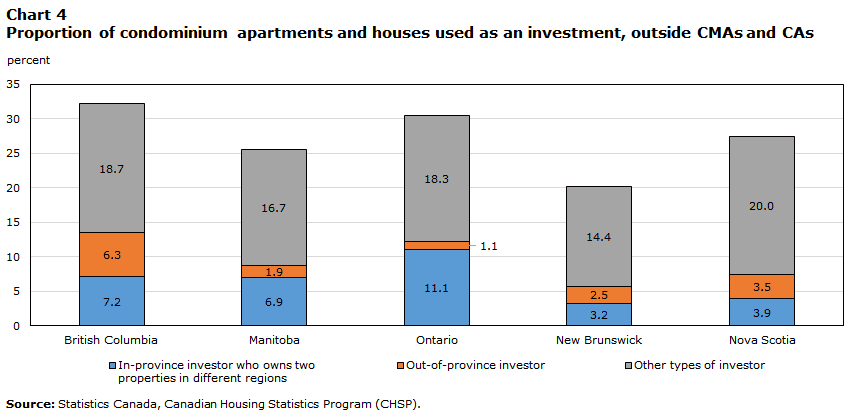
Approximately 36.2 percent of condos in B.C. cities are used as investments. About half of those investors live in the province. The other half of the investors are roughly split businesses (approximately 23 percent) and non-residents.
“That’s probably good for renters, bad for people looking to buy,” Davidoff said. “People who were going to buy are now out-competed by these investors; maybe they go into the rental pool.”
In recent years, some municipalities have been “going soft” on developers, sacrificing development fees in exchange for more purpose-built rental, Davidoff said. However, if more than a third of condos are turned into rentals, the efficacy of that approach is less clear cut, Davidoff argued.
“The argument is: we need more rental housing. Well, if a third of condos are rentals, then it’s not so obvious that condos aren’t helping renters,” he said.
However, investment condos can be less stable than purpose-built rentals.
“Purpose-built rental is better because there’s more security of tenure and you have professional management as opposed to an amateur who can kick you out for their own occupancy whenever,” Davidoff said.
In order to meet the region’s housing need, the most important thing is to build more housing, Davidoff concluded.
“You can make an argument that one [type of housing] is better than the other, but I think that’s less important than just getting housing built.”
However, there could be consequences to a ballooning number of investors sinking their money into real estate.
“Instead of: ‘Let me start a business,’ ‘Let me buy stock in a Canadian company,’ the obsession, I think of many investors, is: ‘Let me buy a property to rent out to somebody else,’” he said. “That’s not great because once homes are built, having investors chase each other to out-bid a relatively fixed number of properties; probably not a sign of a totally healthy economy.”
From 2011 to 2021, the percentage of Canadian households who owned their own home fell from 69 to 66.5 percent.
Across the province, 23.3 percent of homeowners are investors. Including investor-occupants, that figure rises to 32.9 percent. Anyone who owns and lives in a property with multiple units, including a duplex or a house with a basement suite, is considered an investor-occupant.
About 16.5 percent of B.C. houses are used as investments, with the majority of those owned by in-province investors.
On a municipal level, statisticians noted similar investment trends in municipalities such as Richmond, Burnaby and the City of North Vancouver, where investors bought between 21.6 and 24.3 percent of houses and condos. The influx of investment is most evident in Vancouver, where investors own 32.5 percent of houses and condos.
Author