Port Moody facing tens of millions in recreation costs as new facilities study maps 25-year growth needs
Port Moody is facing major new recreation investments – including a long-sought indoor pool, expanded community centres, additional ice time and dozens of new sports courts – as the population doubles over the next 25 years.
City council got their first look at the new recreational facilities study on Tuesday, Feb. 17, which assessed Port Moody’s current infrastructure and measured future demand tied to growth.
While it serves as a long-term planning blueprint rather than a funding commitment, the potential costs of keeping pace with densification could be significant.
Local news that matters to you
No one covers the Tri-Cities like we do. But we need your help to keep our community journalism sustainable.
“How we go about doing this is going to be very key, but there’s only so much money,” said Coun. Callan Morrison. “Are we willing to lose out on another rink or the possibility of an indoor pool, because we want to expand something else? We have to make sure we’re looking at all options.”
The study, launched in 2024, is grounded in extensive public consultation and data analysis, utilization studies, projections and benchmarking against neighbouring municipalities.
An indoor pool emerged as the city’s top priority when amenities were ranked by both public demand and long-term community benefit – ahead of gymnasiums, sports fields and multi-sport facilities.
Indoor pool could cost $60 to $100 million
Port Moody currently operates two seasonal outdoor pools – at Rocky Point Park and Westhill Park – but no indoor aquatic centre of its own.
While residents can reach pools in neighbouring cities within a 10-minute drive, the study found those communities increasingly prioritize their own residents for programming, limiting access for Port Moody families.
The consultants recommend a new indoor pool ranging from roughly 40,000 to 65,000 sq, ft., with the Recreation Complex identified as the optimal site due to shared amenities, energy efficiencies and centralized access. Underground parking would need to be built to accommodate its footprint.
The report gave capital estimates (in 2025 figures) ranging from $67.2 million to $102 million.
“That’s a lot of money,” Coun. Callan Morrison said, noting the need to examine every possible option, including partnerships.
Coun. Samantha Agtarap said the real value of the study is that council and the public can now debate the pool with full financial context.
“People are now going into the discussion with eyes wide open about the cost — not only the capital cost, but the ongoing operating subsidy,” she said. “I think this is great information to see, and I think it speaks to a lot of the questions we’ve had during the OCP public hearing. So here it is laid out.”
The report also notes that building an indoor pool would likely shift most swimming demand away from outdoor facilities, recommending the eventual decommissioning of one of the two existing outdoor pools depending on condition and location.
Community centres nearing capacity
Beyond aquatics, the study flags growing pressure on indoor recreation space.
Port Moody currently has about 77,800 sq. ft. of community centre space across five facilities. While the city’s per capita benchmarks are higher than the regional average, it would fall sharply if the population would double unless new space was added.
The Recreation Complex gym is already operating at 98 percent utilization, and the fitness weight room regularly hits functional capacity during peak hours.
To keep up with growth, consultants recommend a new 30,000 sq. ft. community centre, ideally replacing the deteriorating Kyle Centre – a project council has already begun preliminary design work on.
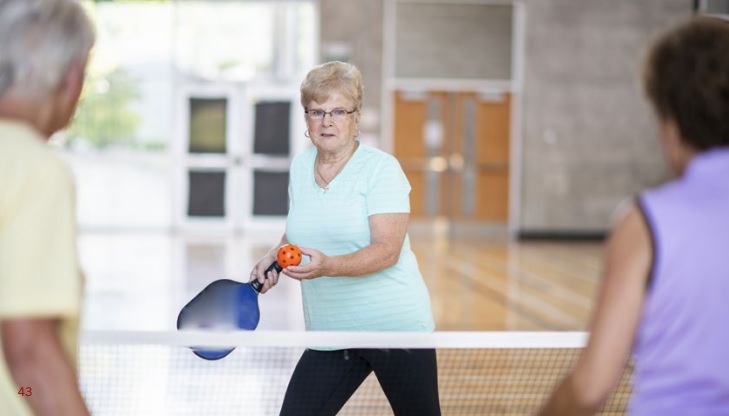
Councillors also pointed to shifting recreation trends, including the explosion in pickleball, and the need for flexible space that can adapt over time.
Ice demand rising
Although Port Moody currently provides more ice per capita than neighbouring municipalities, its two arenas are nearing capacity during peak hours and could be fully booked within five years as demand rises.
To maintain current service levels through 2050, the study suggests one to two additional ice sheets may eventually be required – but notes that regional partnerships or private sector facilities could be more practical than building entirely new municipal rinks.
Nathan Taylor, the city’s manager of recreation, said alternative operating models should remain on the table as priorities evolve.
“There’s definitely some future study and work required in that area,” he said.
Who pays for growth?
While the study carries no immediate financial commitment, it underscores the massive infrastructure costs tied to Port Moody’s growth trajectory.
Coun. Haven Lurbiecki framed the findings as a fiscal “wake up call,” stating she didn’t believe development would be able to cover the costs needed to accommodate service demands.
“This is just recreation. We also have sewer, water, parks, everything else,” she said. “The substantial burden will be not to this generation but future generations.”
Other councillors, however, pointed to incoming updates, development cost charges (DCCs) and the new amenity cost charges (ACCs) as tools to recover some growth-related costs.
Coun. Amy Lubik asked directly whether recreation costs identified in the study could be integrated into those funding tools.
Staff confirmed work is already underway to align facility cost estimates with future DCC and ACC updates.
Mayor Meghan Lahti and Coun. Diana Dilworth both emphasized keeping partnership opportunities on the table – whether through senior governments, nonprofits or private developments – particularly for the big-ticket facilities.
Dilworth pointed towards the recent completion of the Bob Favelle Field and the adjacent Field House as strong partnerships between the city, the Port Moody Rotary Club, and the provincial government.
“That has been a massive success,” she said.
The draft study is now headed to the city’s committees before it comes back for endorsement by council.
Author