Upgrades to Anmore’s Dr. Hal Weinberg Spirit Park estimated at $3 million
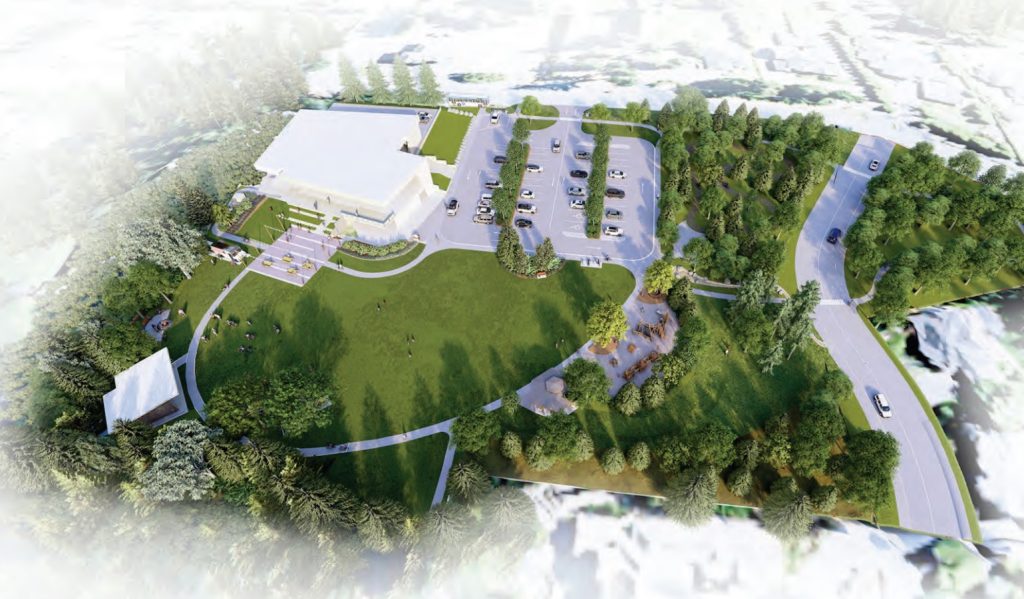
The Village of Anmore has advanced the renewal of Dr. Hal Weinberg Spirit Park to the detailed design phase.
On Tuesday, Nov. 4, council unanimously voted to direct staff to shift from the conceptual to the design stage of the process, and to amend the village’s five-year capital plan to allocate $75,000 from the Parks Reserve towards the work.
Mayor John McEwen said he was “super excited” about the project.
Local news that matters to you
No one covers the Tri-Cities like we do. But we need your help to keep our community journalism sustainable.
“I really like it. I’m looking forward to getting it there,” McEwen said. “I’m also super excited about making this so we can walk around on this and not have to wear gum boots.”
The full redevelopment is currently estimated to cost just under $3 million, though that figure remains conceptual and will be refined through engineering and design work over the coming year.
Chris Boit, Anmore’s manager of development services, told council the park has become increasingly strained by population growth and seasonal flooding, and it doesn’t have a high level of accessibility or inclusivity.
“It’s one of the only real gathering spaces that the village actually has,” Boit said. “When it rains, the top half of the park becomes a bit of a mess, a bit of a swamp.”
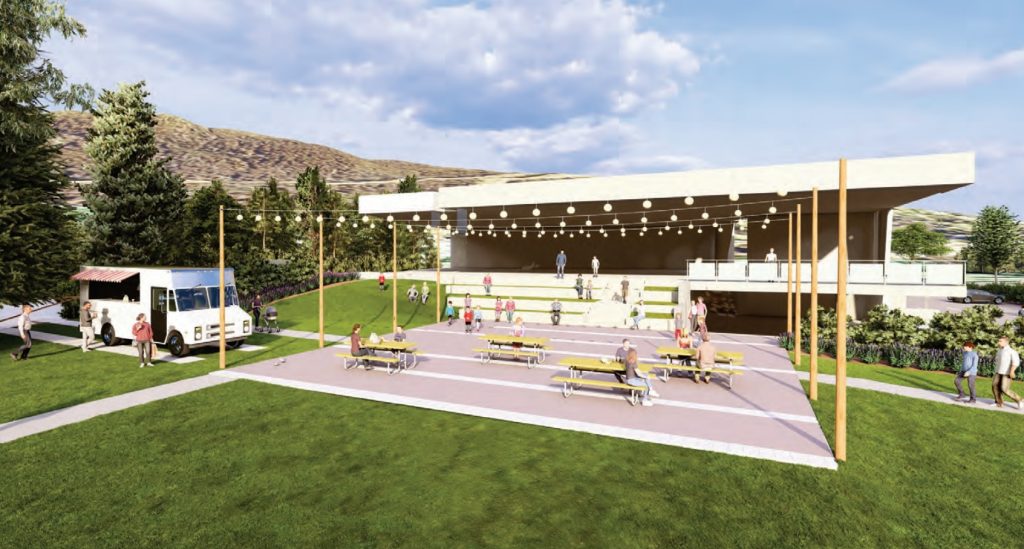
The redesign will include asphalt pathways to improve wheelchair and mobility access, lighting upgrades across the plaza for evening events, and a new bandstand with built-in community storage that can double as a seating area when not in use. Other plans call for a relocated and repurposed gazebo, a natural-themed children’s play area, and space for food trucks during festivals.
Parking around the Community Hub is also expected to be reorganized, with Ravenswood Drive eventually realigned – work already budgeted under a separate allocation.
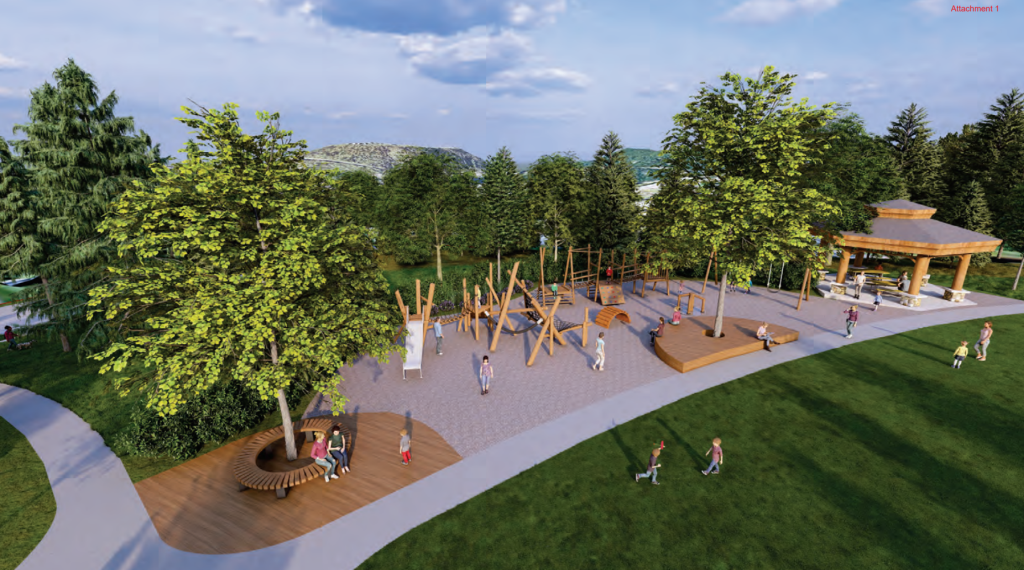
Boit emphasized the draft budget is just a high-level estimate. Staff are exploring the provincial and federal park-infrastructure grants and potentially scale the build in stages if external funding does not materialize
Public engagement so far has shown strong support for new recreational features, Boit said, though opinions vary on programming and layout. Neighbouring residents and committees will be consulted in the detailed-design stage.
Boit said that construction could begin in spring 2026 if design, funding, and tendering remain on schedule. Boit told council the next step will be to “come back with more detailed cost estimates and a phase-in breakdown” so council can prioritize which elements to build first.
Coun. Paul Weverink praised the concept but questioned whether the preliminary budget was realistic.
He also raised some issues with the pathway connections, suggesting better links from Ravenswood Drive to Sunnyside Road and a crosswalk at the park’s corner.
“Other than that, I think it looks good,” he said. “It’ll be nice to get all the trees replanted, and in time, those will grow, and I think it’ll look quite nice,” Weverink said. “I love the fact that it’s one big open space. We talked about this years ago as an idea, and it’s nice to see that this could actually be happening.”
Coun. Doug Richardson, however ,said the space could be made more continuous, and suggested relocating parking to an overflow area away from the park’s core.
He said that certain items in the plan, such as relocating the gazebo, could be phased in at later years to save costs.
“When I looked at your budget … I had a heart attack,” he said. “Right now the gazebo meets all the needs of the residents, so from a phasing perspective, maybe leave the gazebo and move it in five or 10 years.”
Richardson introduced an amendment, which passed unanimously, directed staff to return with three alternative concept designs for review.
McEwen suggested adding an a dog off-leash area and a Remembrance Day cenotaph, and said he could see pay parking be implemented in the summer to help the village generate revenue.
Author