Coquitlam psychiatric patient found not criminally responsible in 2023 Chinatown stabbings
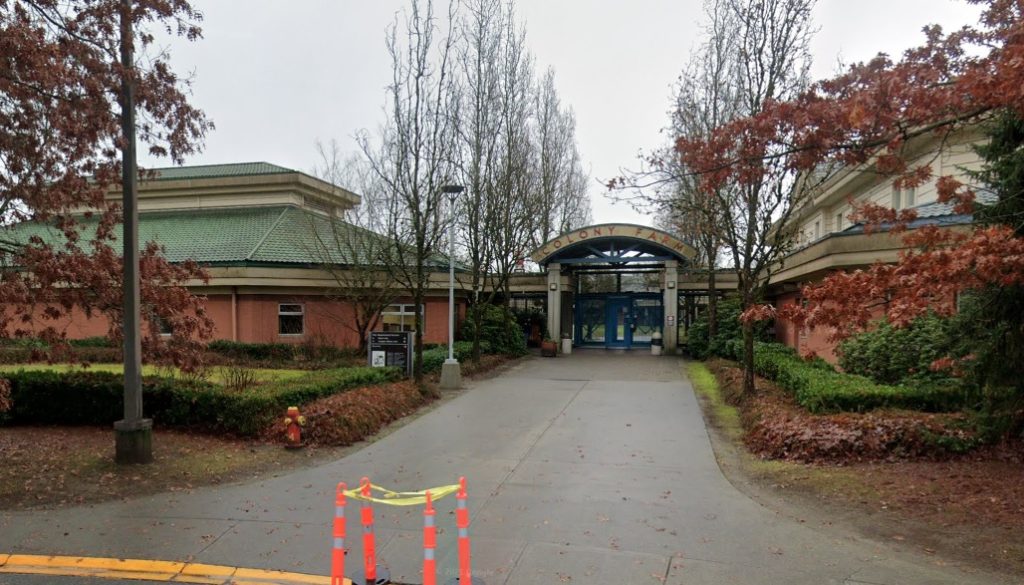
The man who left Coquitlam’s Forensic Psychiatric Hospital at Colony Farm on an unescorted pass and went on to stab three strangers at a Chinatown festival has been found not criminally responsible due to mental disorder (NCRMD).
In a decision released Oct. 24, 2025, B.C. Supreme Court Justice Eric Gottardi ruled that 66-year-old Blair Evan Donnelly was in a state of psychotic relapse when he left the Colony Farm facility and carried out the daylight attack two years ago.
“Mr. Donnelly was incapable of making a morally grounded and rational decision when he opted to engage in unprovoked attacks on innocent victims,” Gottardi said, stating Donnelly’s delusions that God ordered him to hurt someone in Chinatown “rendered him incapable of knowing his actions were morally wrong.”
Local news that matters to you
No one covers the Tri-Cities like we do. But we need your help to keep our community journalism sustainable.
The case has raised questions about how high-risk psychiatric patients are supervised in the community. Following the attacks, B.C.’s premier called for an independent review into how Donnelly – who has a long history of mental health episodes leading to unprovoked attacks – has continually been able to secure unescorted day releases.
The judgment outlines how Donnelly — a long-term patient at the provincially run Forensic Psychiatric Hospital (FPH) located beside Colony Farm Regional Park — was granted a day pass to go on a bicycle ride on the afternoon of the attack.
He left the secured hospital grounds around 1:30 p.m., pedalled along Colony Farm Road toward Coquitlam, and instead of turning right toward the coffee shop he’d named in his request, he turned left.
According to his testimony, he believed he was being “prompted by God” to go to Chinatown to hurt someone.
Donnelly then biked to a Home Depot in Coquitlam, purchased a chisel, and boarded the SkyTrain at Braid Station bound for Vancouver. Hours later, he stabbed three festival-goers — Pretty Luong, Karen Mach, and Dan Mach — during the Light Up Chinatown celebration.
He was arrested minutes later by police a few blocks away.
Donnelly had been under psychiatric detention at Colony Farm for nearly two decades. In 2006, he killed his 16-year-old daughter in Kitimat while suffering from religious delusions, and was found NCRMD.
Since then, he had been housed at the Coquitlam hospital, a maximum-security facility that treats patients found not criminally responsible or unfit to stand trial.
The court recounted two additional violent incidents inside the facility – a 2009 knife attack on another patient during a day leave, and a 2017 stabbing attempt during a hockey game at the hospital cottages – both followed by findings of NCRMD and treatment at FPH.
Despite those episodes, Donnelly’s doctors had gradually expanded his community privileges, including unescorted leaves under the Criminal Code Review Board’s oversight. By 2023, staff reported no active psychosis or behavioural problems, and he was approved for independent outings like the September bike ride that preceded the stabbings.
Within days of his arrest, Donnelly was transferred back to the Coquitlam hospital. His mental condition quickly deteriorated – refusing medication, singing religious songs in seclusion, and speaking of the “end of days,” according to psychiatric notes cited in court
One forensic psychiatrist testified that the attack fit a recurring pattern: sudden eruptions of violence as the first visible symptom of psychosis, followed by overt religious delusions once he was back in care.
He diagnosed Donnelly with schizoaffective disorder, bipolar type, describing the delusion as an “autochthonous experience” that appeared “fully formed, seemingly out of nowhere.”
“Overwhelmed and convinced by the belief that God wanted him to stab people, Mr. Donnelly’s psychotic illness rendered him incapable of making a morally grounded and rational decision,” the psychiatrist said. “In his mind, his actions were not wrong in a moral sense, as they were compelled and sanctioned by God.”
Crown prosecutors argued that even if Donnelly’s act was influenced by delusion, he still knew it was morally wrong – pointing to his admission that he fled because he “knew what he’d done was wrong.”
However, Gottardi rejected that interpretation, noting Donnelly’s “turmoil” and inability to reconcile his faith with his violent impulse. “Eventually his morals were overrun by this feeling from God that he ought to harm somebody . . . it was not a rational choice or a choice based in reality,” he said.
Under the Criminal Code, a person is NCRMD if, because of a mental disorder, they are incapable of appreciating their act’s nature or of knowing it was wrong. The ruling means Donnelly will not serve a prison sentence but will instead remain under the jurisdiction of the B.C. Review Board, which will determine his future detention and treatment at FPH.
Gottardi’s ruling does not address the administrative decisions that led to unescorted leave, but emphasizes the law “does not convict people for being sick.”
“We will not hold an individual criminally responsible if, at the time of the offence, they were suffering from a mental disorder which interfered with their ability to know right from wrong. . . . We do not convict people of crimes for being sick,” she said.
A provincial review regarding how Donnelly was deemed suitable for unescorted community leave has not yet been released.
Author