Water main work set to hit David Avenue
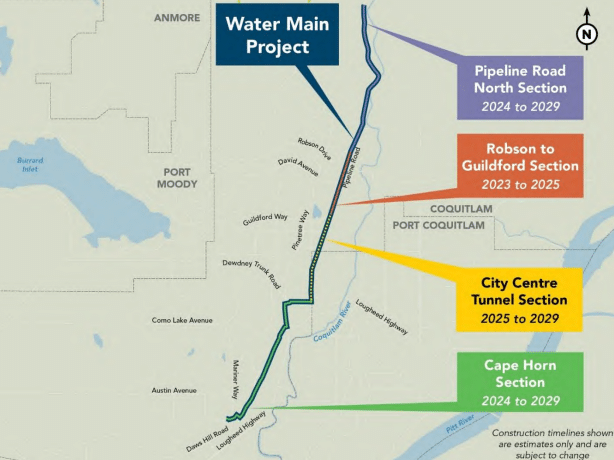
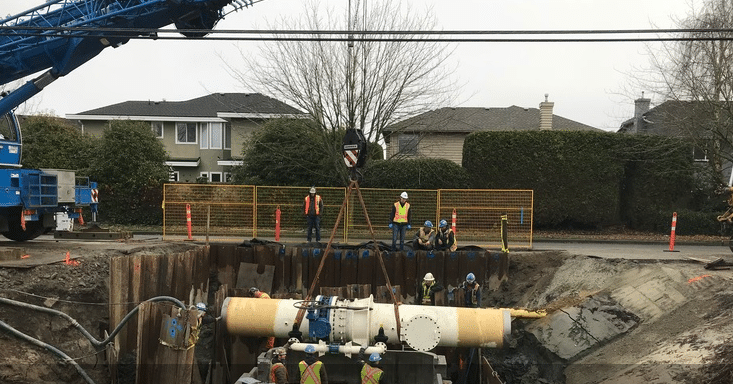
The 12-kilometre water main is set to snake through David Avenue this spring, requiring trench excavation and shoring to allow for the water main to be installed, according to a release from Metro Vancouver.
As the project inches north along Pipeline Road, crews are set to bring in heavy equipment including a drilling rig, hydro-vacuum truck, and excavators through the David Avenue intersection.
While Metro Vancouver pledged to maintain traffic flow “as much as possible,” drivers were also advised to plan alternate routes to avoid possible traffic snarls.
Local news that matters to you
No one covers the Tri-Cities like we do. But we need your help to keep our community journalism sustainable.
“Road users can expect reduced lanes,” stated a release from Metro Vancouver. “We recognize this work is disruptive and we are working closely with our contractor to minimize construction impacts.”
The work follows up on 500 metres of steel pipe installed between Guildford Way and David Avenue in February. All major work in the area is slated to wrap up by early spring, according to Metro Vancouver.
After three years of work, the 1.4-kilometre Robson-to-Guildford section is scheduled to wrap up in 2026, with the entire project tentatively slated to finish by 2029.
To keep up with the region’s growing population, the 3.2-metre diameter main is needed to: “avoid impacting delivery of water to the southern and eastern areas of the region,” according to a Metro Vancouver staff report.
Metro Vancouver awarded an approximately $97.2 million contract to Michels Canada Company for the project.
Engineers previously estimated the pipeline would cost $75 million, however: “pent up demand for infrastructure spending coupled with ongoing supply chain issues” resulted in the higher price, according to Metro Vancouver staff.
Coinciding with the water main, Metro Vancouver is also planning to double the amount of water drawn from Coquitlam Lake.
The lake currently supplies about 370 million litres of water per day – about one-third of the drinking water needed by the region’s 2.7 million residents, according to Metro Vancouver. The expansion is set to be complete in the late 2030s.
Author