‘Trees are . . . miraculous’ Local group advocates for greater tree canopy
It’s a scorching hot summer day in 2021 when a group gathers at a cul-de-sac near Mundy Park.
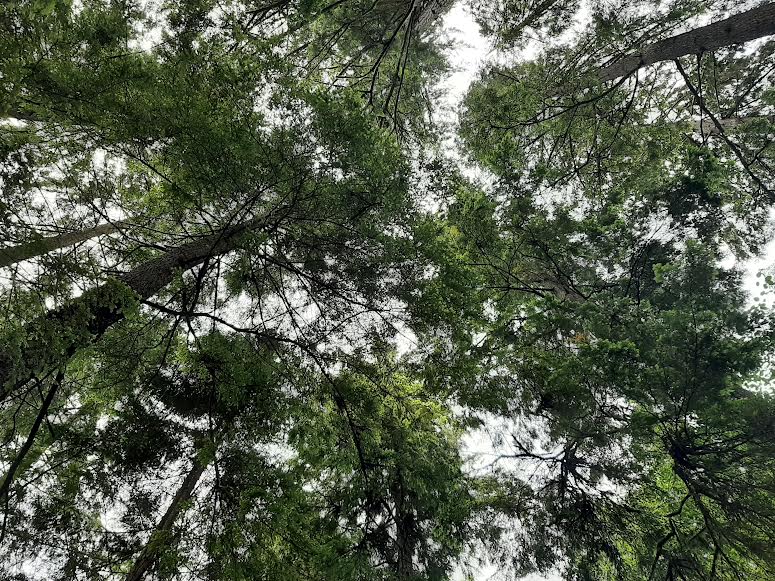
They are joining Kathleen Wallace-Deering, a neighbourhood resident, in saying goodbye to 82 trees. Fifty-six of them were slated to be cut down with the redevelopment of a large lot on her street, which put an additional 26 at risk to wind exposure. They all had to go.
Lori Austin was there to support Wallace-Deering.
Local news that matters to you
No one covers the Tri-Cities like we do. But we need your help to keep our community journalism sustainable.
“It was a devastating loss,” she said. “Because there had been trees along the back of her yard for many years, that provided a lot of shade, a lot of habitat. They had bird feeders and so on — it was just a big part of their lives.”
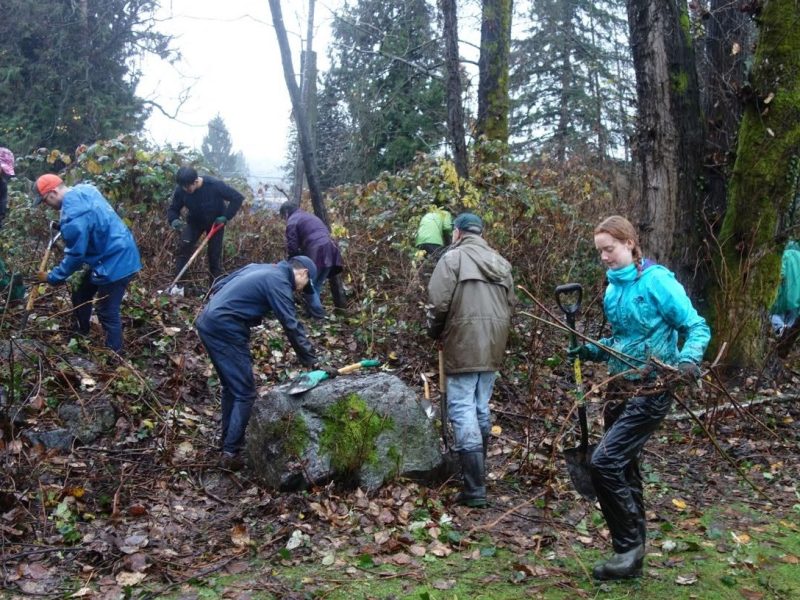
That day was the first time this group all met in person. It was also the beginnings of what is now known as the Tri-Cities Urban Forest Working Group.
Grayson Barke, another attendee, said it was an important moment.
“We were there to support her in a time of grief. And really to start a larger conversation about, what does this mean for Coquitlam? And not just Coquitlam, the Tri-Cities, Metro Vancouver region — this place we call home.”
Through this experience, he says they learned that many other Coquitlam residents are losing trees in their neighbourhoods due to housing development, without many protections in place to stop it.
With climate change already heating up our cities and creating unprecedented events like the 2021 heat dome — experts agree that a 40 percent tree canopy cover is an ideal target. This amount allows an urban forest to provide many benefits, which include things like cooling, stormwater management, air purification, and improved mental health.
But many municipalities — including Coquitlam — are already falling short of this goal. And with the province’s new housing legislation not including tree protection, people like Austin and Barke are among the many concerned this target might be out of reach.
Why we are losing trees
From 2014 to 2020, the amount of tree-canopy in Metro Vancouver dipped from 32 to 31 percent in urbanized areas, according to a report released earlier this year. Impervious surfaces, such as roads, increased from 50 to 54 per cent in the same six-year span.
In Coquitlam, tree canopy decreased from 40 to 36 percent in this period. Presently, it is at 33 percent, according to Erin Gorby, Coquitlam’s Urban Forestry and Park Services Manager.
“It’s not unique within the Metro Vancouver Region,” she said of tree canopy decline. “You’re seeing declines in canopy cover across the region. And there are unavoidable impacts to canopy cover in growing communities.”
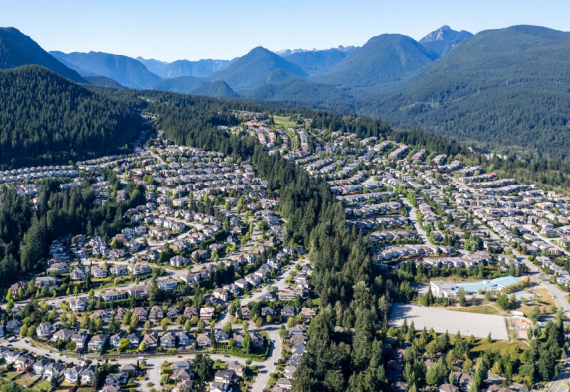
There are two major reasons for the decline, according to Stephen Sheppard, a professor at the University of British Columbia’s Department of Forest Resources Management. One is when new housing developments are built in forested areas. The other is densification — for example, when a single-family home is torn down and rebuilt as a multi-unit building, mature trees on that property are often cut down too.
“And when those trees are mature, but still healthy, then we’re losing a lot of benefits and it’s not being balanced. It’s going to take 50, 60 years on that site to get anything like that canopy level back,” Sheppard said.
Concern about new housing legislation
With increasing awareness about the importance of trees for a city’s overall health, more and more municipalities have been creating urban forest management strategies with the goal to increase their canopy cover.
Port Moody released its own strategy last year, with targets to increase city-wide canopy cover to 58 percent, and from 28 to 31 percent in urban areas outside of parks and industrial lands by 2050.
But Port Moody Coun. Amy Lubik, who has been vocal about her concerns on tree canopy loss, is concerned about the impact that the provincial housing Bills 44 and 47 will have on the city’s ability to protect their trees. The legislation aims to build new housing and requires municipalities to adopt changes into their Official Community Plans.
“When it comes to preserving trees, the province says you can’t unduly restrict development. And right now, that’s kind of open to interpretation,” Lubik said.
The councillor said that while she is supportive of increasing housing — especially affordable housing — she’s worried the city won’t be able to protect trees on properties slated for development. Even if they replant newer trees, they won’t provide the same level of canopy cover or carbon sequestration services for decades.
“The worry is there’s going to be a lot more density in areas that we didn’t expect to have density,” Lubik said.
Port Moody submitted resolutions to both the Lower Mainland Government Association and Union of BC Municipalities, requesting that cities maintain control over their urban canopy.
The benefits of trees
Trees are like a natural air conditioner, said UBC professor Sheppard. Not only do they provide shade, but they also “breath out air moisture” in a process called evapotranspiration. The water trees suck from the roots to the top to provide water for the leaves, giving off moisture and cooling the air.
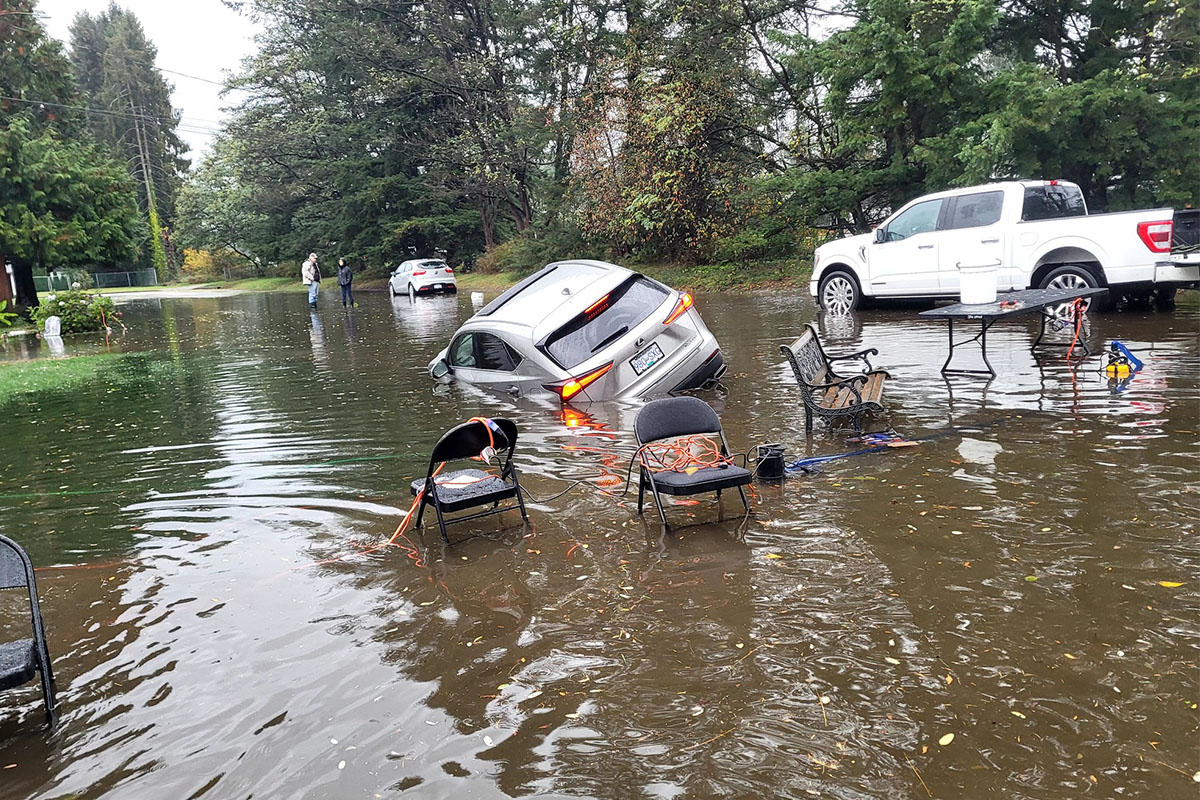
A good tree canopy can also reduce flooding and help with stormwater management. With enough trees, it slows down the rate that rainwater first hits the ground. Then, if there’s enough pervious surfaces — areas that let water soak through the ground rather than run off — roots will soak up water and this can prevent floods.
“You’re reducing some of the tendency that climate has to drop a lot of water in a short period of time,” Sheppard said.
Trees also reduce air pollution by slowing down wind speeds, collecting physical particles on their leaves, and, of course, taking in carbon dioxide and putting out oxygen.
These benefits, Sheppard said, add up to billions of dollars over time in reduced hospital costs and considerations of other air filters.
Trees also support people’s mental health, with multiple studies demonstrating how green space reduces stress, ADHD symptoms, and even promotes faster healing times. They also provide recreation benefits – such as walking, running, or biking.
Fair distribution of canopy
It can be crucial to ensure trees are equitably distributed throughout a city.
“We need to think about where those trees are, and who has access to them,” said Lorien Nessbitt, a UBC professor in urban forestry and environmental justice. “Making sure that it’s not just rich people or highly educated people who have access to good tree canopy, but people who are lower income or who live in denser neighborhoods.”
This is something Coquitlam acknowledged while in the process of designing its urban forest management strategy. Gorby, Coquitlam’s urban forestry and parks services manager, said tree distribution is something their consultants are currently mapping out, and will inform some of their tree planting strategies in the future.
Protecting trees
It is possible to achieve both goals of housing density and urban tree canopy growth, Sheppard said. “We all agree we need more housing. And many of us agree we need more density. It’s an issue of how it’s done, and not regardless of what else is there,” he said.
For large developments, Sheppard said it is important to try to protect trees that are already on that site – and the root space they require.
For densification — like turning single family housing into multi-family units — renovation, rather than a teardown, is a good idea to avoid clearing trees on that property. Sheppard also suggested limiting a building’s footprint and developing taller units instead.
He said he hopes to see legislation that limits the amount of impervious areas (things like asphalt, roof, or other hard spaces), reduces the removal of living healthy trees as much as possible, and maintains enough soil volume and root space for healthy vegetation. Community engagement and civic stewardship are also essential to having a healthy urban forest, he added.
“Without that, it’s going to become much more of a concrete jungle.”.
Back in Coquitlam
Gorby says she shares people’s concerns on the provincial housing legislation.
“There are those unavoidable impacts of development on an urban forest. It’s difficult to safely retain trees on development sites,” she said.
But because Coquitlam’s urban forest management strategy is being designed at the same time as they are learning about this new legislation, they can take it into account, Gorby said.
For example, she said that if a single-family home is replaced by a multi-unit building, there is most likely less space to preserve existing trees or to replant them afterwards. But even if there’s only space to only plant one tree, they could ensure it will have enough soil volume to be healthy.
She said Coquitlam is aiming to have the strategy endorsed by council early in 2025.
In the meantime, concerned citizens such as Barke and Austin are continuing to advocate for tree protection in their communities and beyond.
“We have talked to everybody who will listen. And we’re still worried because we haven’t been able to really get the attention of the province to take this seriously,” said Austin.
The Tri-Cities Urban Forest Working Group has reached out to MLAs, MPs, city councillors, BC ministers, experts, Metro Vancouver, as well as other environmental groups in an effort to increase tree protection.
“Our cities need to be building themselves up like fortresses for what’s coming, the heat and the rain that we’re going to experience. And if we’re welcoming lots more people here, you know, they deserve that as well,” said Barke.
“It’s one of those things that we cannot replace, like, there is no artificial tree,” he added. “Trees are — through photosynthesis –they’re miraculous, and there’s nothing else we have that’s like that.”