Handing out detention: Coquitlam looks at ways to slow stormwater
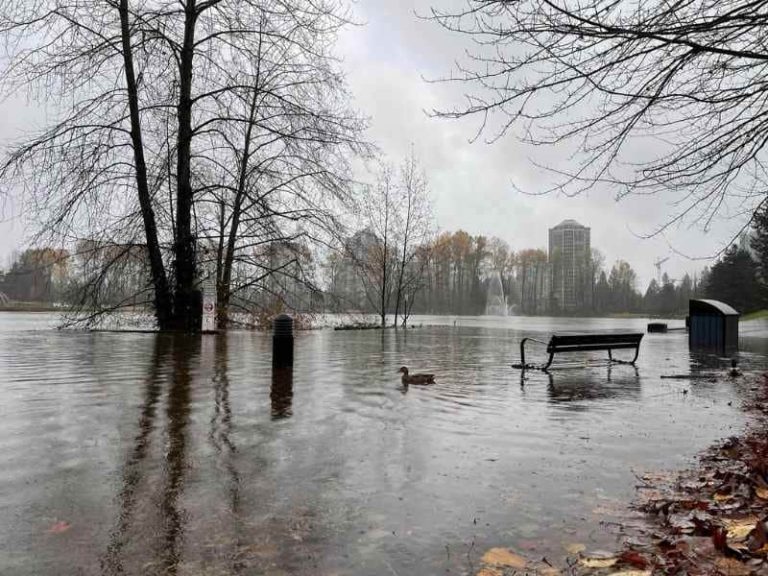
Following the most recent atmospheric river, Coquitlam council discussed how the city might keep stormwater from triggering slides and swelling rivers at a Monday morning meeting.
Water detention structures, which would function like temporary holding cells for the rain, would either stop or slow the flow of stormwater, according to city staff.
“This concept of slowing the water release down I think is critical to protecting the creeks,” said Coun. Craig Hodge.
Local news that matters to you
No one covers the Tri-Cities like we do. But we need your help to keep our community journalism sustainable.
The tanks are an effort to mimic the work formerly done by forest canopy and permeable soil, he noted.
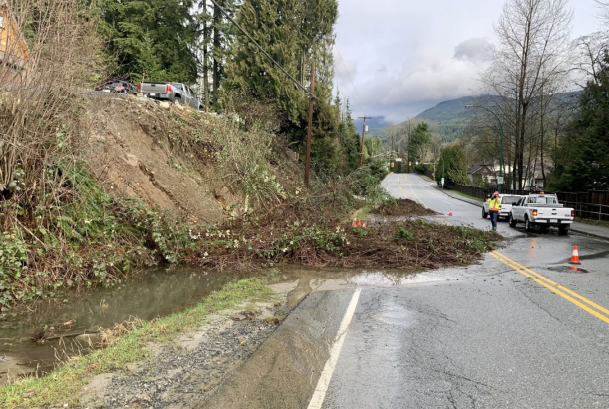
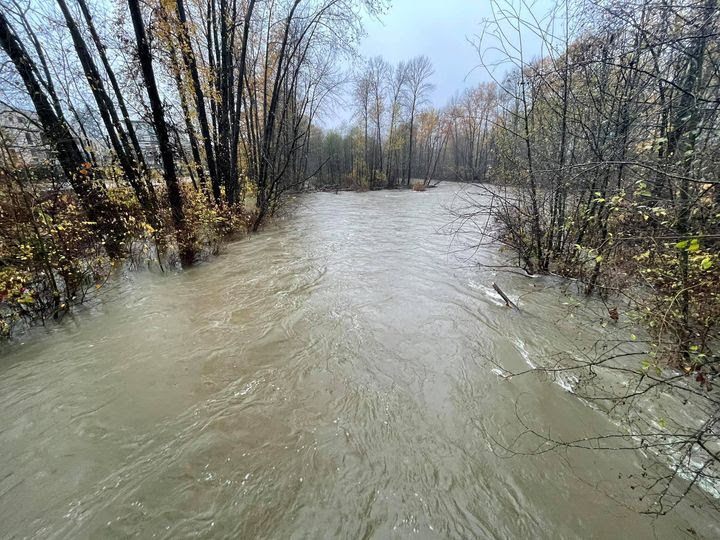
Increased density has often led to more pavement and larger rooftops. When a hard rain falls there’s more runoff, less water ends up in the ground, and there’s a greater chance of a torrent of water dragging soil into waterways.
To deal with these problems, which are exacerbated by climate change, the city is considering requiring the detention structures on new low-density residential projects.
The detention tanks, which would vary in size based on location and lot size, would store and then slowly release rainwater into the ground. In the case of October’s atmospheric river, the tanks would likely have been eventually overwhelmed by the volume of rain and released the water into the city’s drainage system, according to city staff.
“This is one component in a larger plan that we need to be looking at,” said Coun. Matt Djonlic, who underscored the need to retain green space and to examine other ideas like rain gardens.
The new rules, which would still need to be finalized and approved, would focus on single-family homes and two-family subdivisions on lots with a limited permeable surface area. Collectively, low-density areas make up about 31 percent of the land in Coquitlam.
Historically, permeable surfaces used to take up about half the lot in many low-density areas. But with bigger homes and the addition of sheds and driveways, permeable surfaces like lawns now sometimes take up 10 percent of the total lot area.
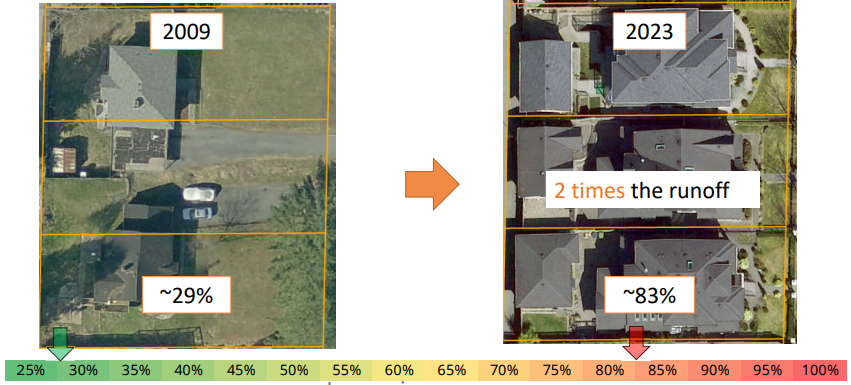
The push for new housing is also a factor to be considered, noted the city’s general manager of engineering and public works Jaime Boan.
New provincial legislation allows three or four units of housing on lots previously zoned for single-family housing. That change could add stress on drainage systems, Boan explained in a city staff report.
Besides swelling creeks during a rainfall, the increase in pavement also means a reduction in groundwater that affects the city’s 300 kilometres of waterways, explained utility planning manager Sergio Garcia.
Maple Creek, which is fish bearing, needs a groundwater well to maintain minimum base flows in the hottest part of the year, according to a city staff report.
For installation, the detention tanks generally cost about $1,200 per cubic metre, according to a city staff report.
However, a failure to add the infrastructure would likely result in the city charging an extra $50 million in development cost charge over the next 30 years, according to city staff.
Responding to a question from Coun. Teri Towner, the city’s director of utilities Jonathan Helmus clarified that the tanks would not solve the city’s issues with inflow and infiltration, which sometimes result in sewage backing up and spilling over city streets.
The sewage problem is generally caused by rainwater saturating the ground, pouring into the sewer and spilling out of old pipes,
Author